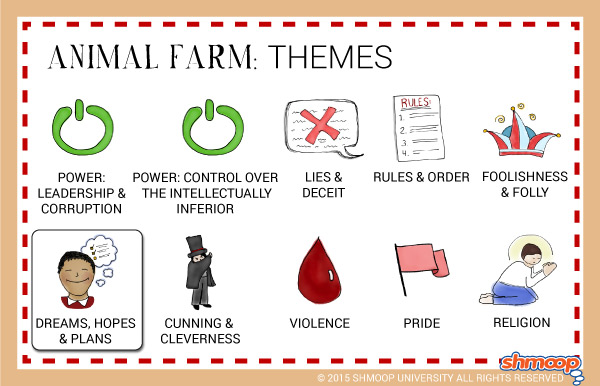
 (Click the themes infographic to download.)
Do you dream of a world full of pillows in which you can lie around eating Doritos and listening to drone music all day? Keep dreaming. (Eventually, you're going to have to get up and pee.) Animal Farm may be a specific criticism of one dream—the dream of a communist Russia—but it's also a criticism of utopian ideals in general. The problem is people. No matter how great your manifesto, it can only be put into action by people—flawed, selfish, stupid, and vain people.
Questions About Dreams, Hopes, and Plans
- Old Major's dream is pretty clear, but what about the dreams of other animals? Do we ever lean what they want directly, or are they just going on with his vision?
- How does Old Major's dream die? What happens to turn hope into despair? (Or is it despair at all? Do the animals still have hope at the end?)
- What the difference, in Animal Farm, between a dream and a plan? Is the whole disaster Old Major's fault for not having a clear plan to make his dream a reality?
Chew on This
Try on an opinion or two, start a debate, or play the devil’s advocate.
Old Major's dream is just that: a dream. There's no way it could ever be a reality.
Although one disaster after another hits Animal Farm, the animals never lose hope that someday their vision of a collective future will come true.