Symbolism, Imagery, Allegory
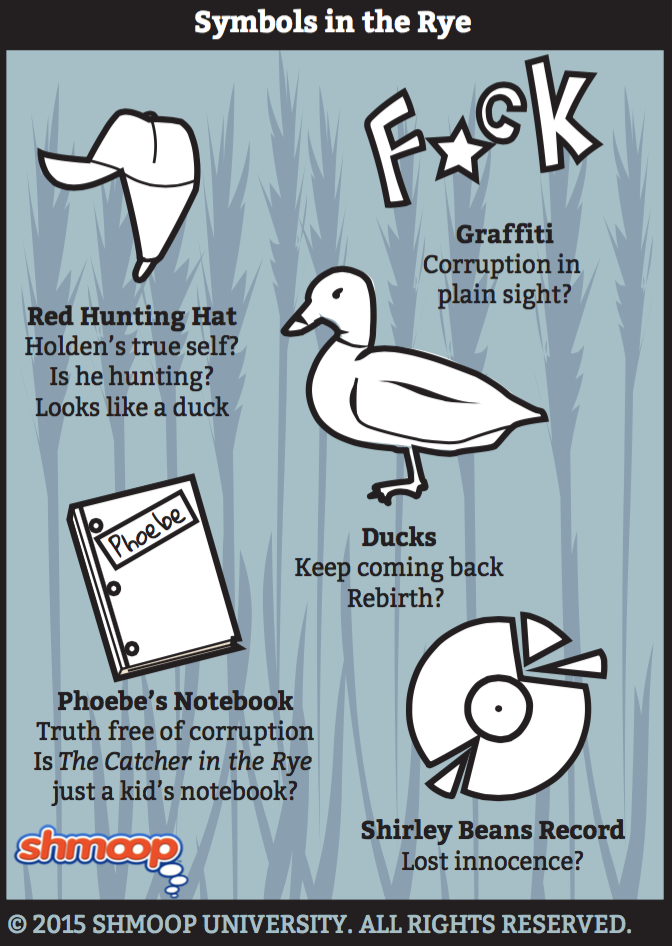
(Click the symbolism infographic to download.)
Holden just doesn’t want to grow up. (He’s a Toys R Us Kid.) "Certain things,” he says, “you ought to be able to stick […] in one of those big glass cases and just leave them alone" (16.25). He's making a rather explicit connection here between the Indian Room at the museum (where the displays always stay the same) and the children (who are always changing) who visit on field trips. Since Holden is so straightforward about the connection, you'll really a lot from reading what he has to say on the subject (the last four paragraphs of Chapter Sixteen).
But there’s one less straightforward aspect we wants to investigate. Holden says that, while the displays stay the same, a person is different every time he comes back to visit. It’s not age, exactly: it's the changes you goes through in order to become an adult. So he's talking more about the intangible qualities of youth and innocence than he is about the physical ones. Just look at his list of examples—hearing parents fight, or seeing a gasoline puddle: these are examples of awareness, of mental growth, not of physical aging.
The question is, can you age physically without aging mentally? And would you even want to?