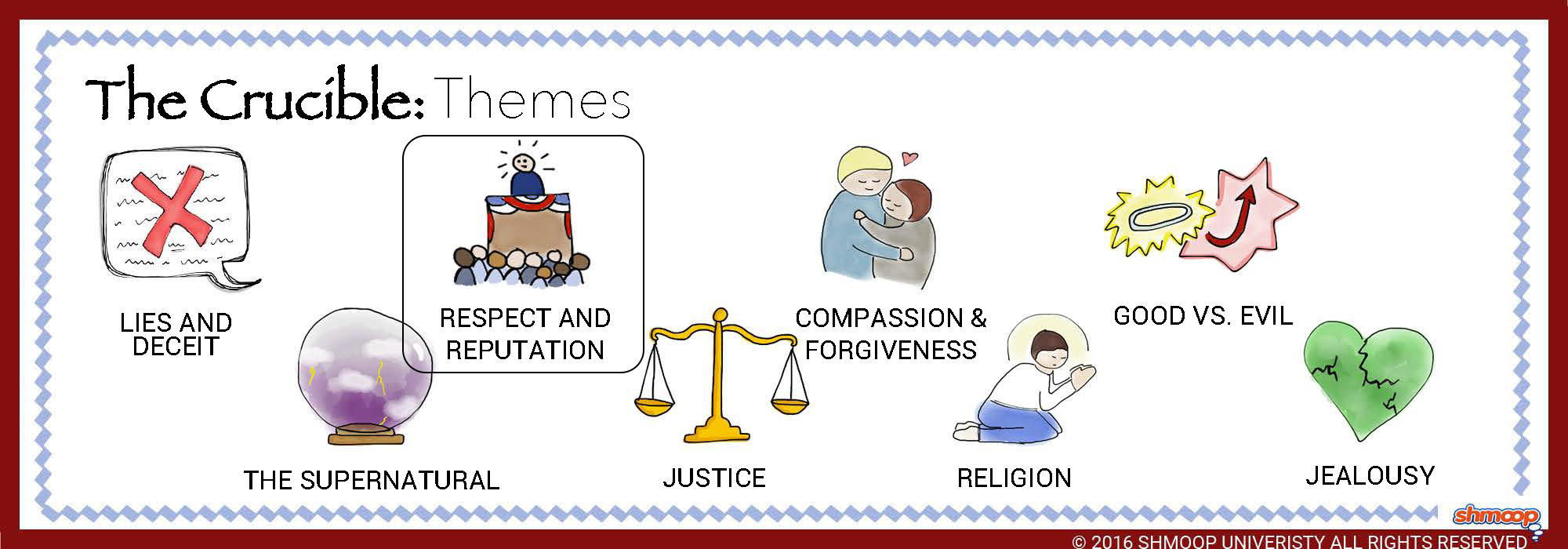
 (Click the themes infographic to download.)
Reputation is extremely important in a town where social standing is tied to one’s ability to follow religious rules. Your good name is the only way you can get other people to do business with you... or even get a fair hearing.
Of course, reputation meant nothing when a witchcraft accusation was staring you in the face. But reputation is what made the Reverend Hale begin to doubt whether the accused individuals were actually guilty. And it was for the sake of his reputation and his friends’ reputations that John Proctor refused to sign a false confession. He would, quite literally, rather die.
Questions About Respect and Reputation
- Why is reputation so important to the people of Salem? What happens if you lose your good reputation (before the witch-hunt)?
- In what ways is a good reputation in the play similar to the way we think of it today? In what ways is it different?
- What are some of the factors (lust and greed being two obvious ones) that cause people to ignore the good reputations of their neighbors?
Chew on This
Although John Proctor goes to his death falsely condemned as a witch, he gains his reputation and respect among those who matter, like his wife, because he refuses to falsely identify his friends and neighbors as witches.
The loss of Abigail’s reputation toward the end of the play shows that characters in The Crucible eventually earn the reputations they deserve, despite the personal tragedies that might take place along the way.