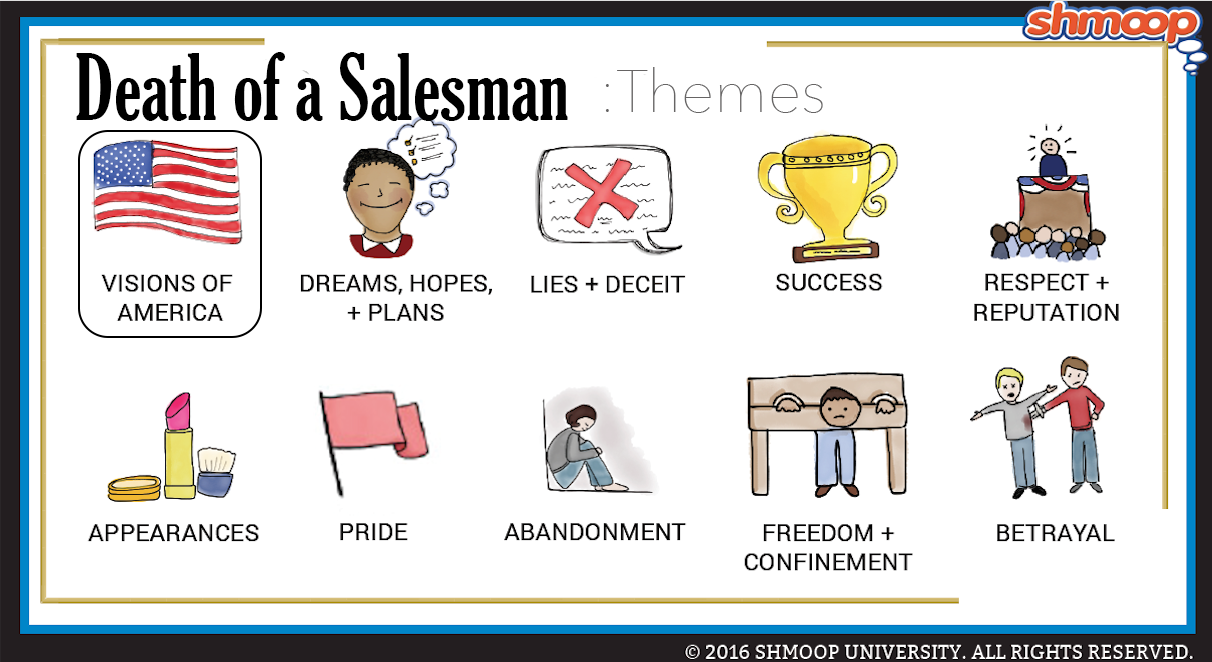
 (Click the themes infographic to download.)
O beautiful for spacious skies? Yeah, not so much here.
While characters such as Willy, Linda, and Happy believe the U.S. to be a wellspring of easy opportunity and imminent success, the 1940s America of Death of a Salesman is crowded, competitive, and mundane—just like Walmart on Black Friday. This contrast sets up an important gap between reality and characters’ aspirations in the play. In the end, Willy’s belief that his self-worth is determined by material success destroys him.
Questions About Visions of America
- Does Death of a Salesman attack the American Dream? If so, how?
- Compare and contrast the depictions of the East Coast and the American West in Death of a Salesman. What do the different geographic regions represent to Willy? Ben? To Happy and Biff?
Chew on This
By directly linking his sense of self-worth to the achievement of the American Dream, Willy’s professional failure becomes personal failure and a crisis of identity.
Biff’s struggle in Death of a Salesman is primarily one of separating his sense of self-worth from his professional life.