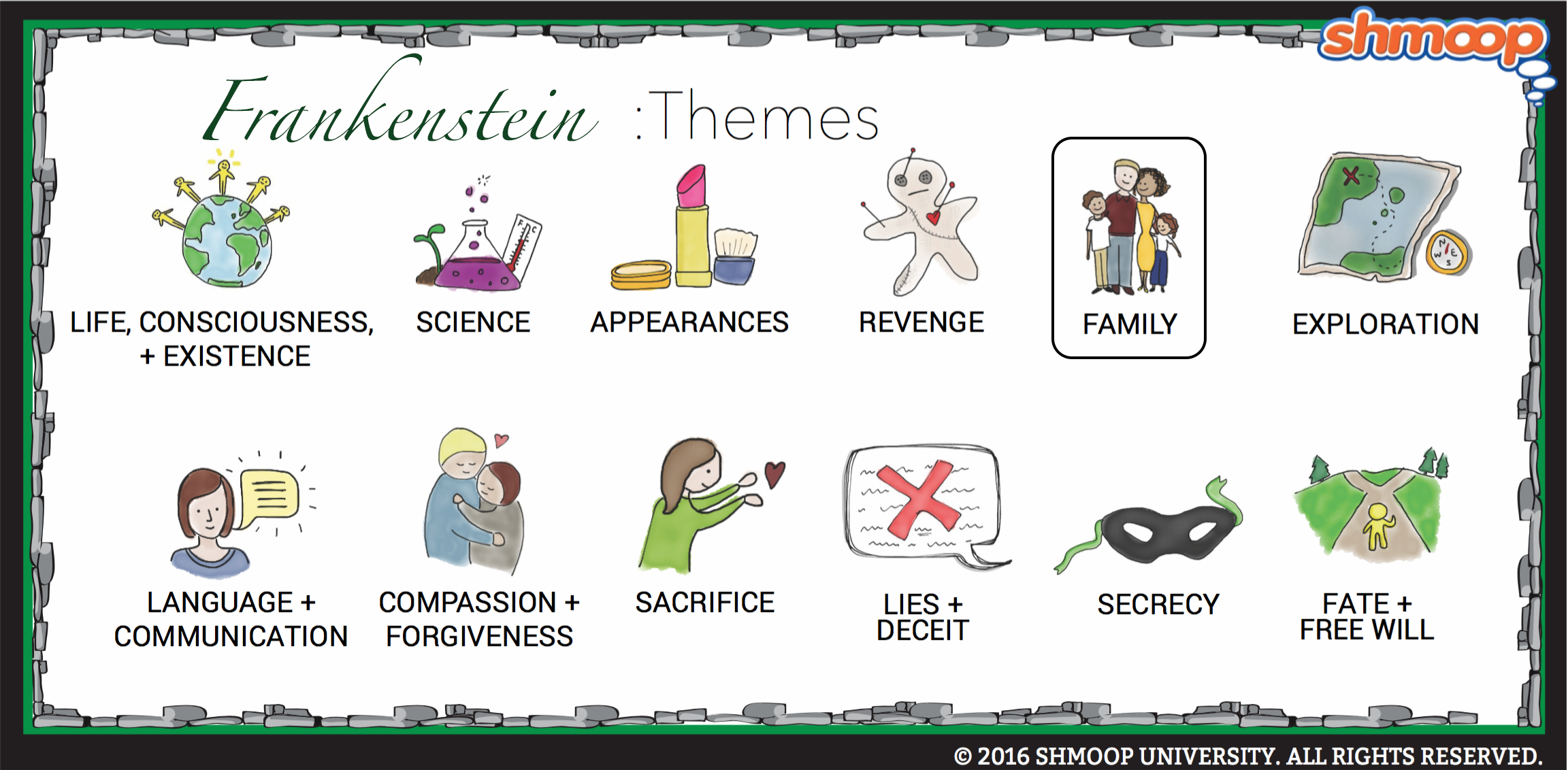
 (Click the themes infographic to download.)
Victor, the monster, and the Fresh Prince of Bel-Air have one thing in common: Parents just don't understand. If only Victor's dad had taken the time to explain why Agrippa wasn't worth reading instead of just muttering about the trash kids these days read, maybe the whole tragedy would have been averted. Or so he says. Frankenstein might seem to suggest that having a good family is the solution to all of society's problems (like murderous monsters), but we're not so sure. The one nice family we see ends up exiled in a cottage in the middle of the woods. It's not much of an advertisement for family togetherness.
Mommy Issues
Questions About Family
- What is the significance of the peasant family in relation to the rest of the story? Is it supposed to be a model for us to emulate? Or are there problems with their family, too?
- Why is it important that Walton is writing letters to his sister? Would the action have held different significance if he were writing to his wife or a friend? (Think about the other sister figures in this text, as well as the other wife or lover figures.)
- William's death foreshadows further tragedy in the book. But does it also have meaning in the sense that William is Victor's brother? Why is the brother the first to go?
Chew on This
Victor's mother's death is the impetus for his creating the monster. Because such an event was beyond his control, Victor is morally exonerated from responsibility for the tragedy that follows.
Walton's need for a friend mirrors the need the monster has for a mate. Gender doesn't matter in Frankenstein's relationships: the point is closeness and intimacy, not sex.