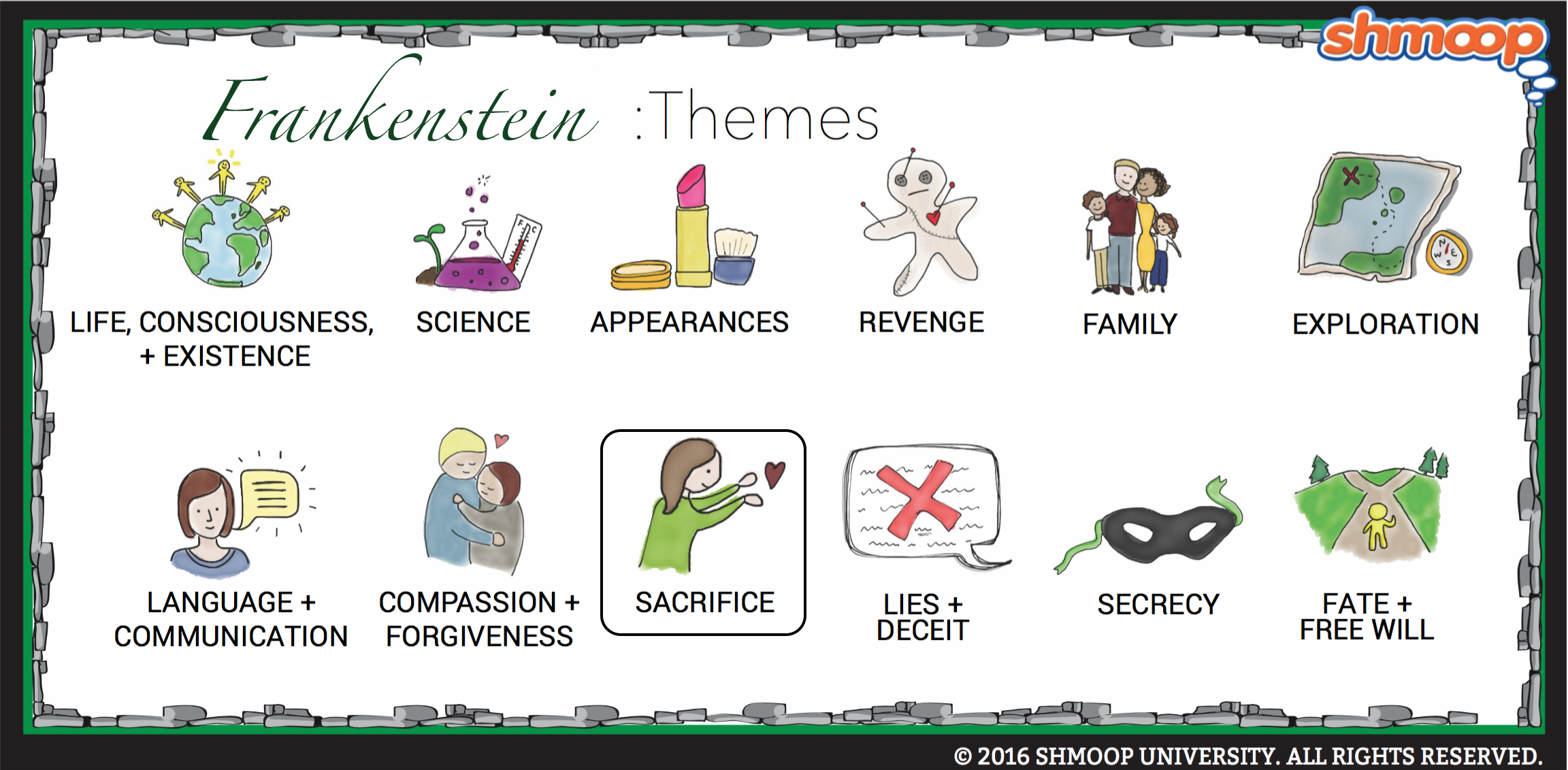
 (Click the themes infographic to download.)
You know who sacrifices himself to save humanity? Jesus. And, if you were an ancient Greek or Roman, Prometheus. Does that make Victor a god-like figure? Or does he just want to think of himself as a god-like hero? After all, Victor's self-sacrifice also includes the sacrifice of those he loves, so—work with us here—it seems more an act of inhumane, self-absorbed injustice than like love for humanity. In Frankenstein, Victor decides to be a hero in his own mind rather than preserving the lives of those he loves. Thanks, but we can do without that kind of sacrifice.
Questions About Sacrifice
- Is Victor sacrificing himself or his family when he chooses to destroy the monster? Does he realize that he's going to be sacrificing his family along with himself?
- When Victor destroys the monster's mate instead of finishing it, is he truly enacting a self-sacrifice, or is he using self-sacrifice as an excuse to exact revenge on the monster for killing William and making Victor feel so guilty?
- Is Victor a Christ figure? Is he a Prometheus figure? (Check out "What's Up With the Title?" for thoughts on that.) What are the differences between a Christ figure and a Prometheus figure?
Chew on This
Victor wants to destroy the monster more out of a desire for revenge than any noble ideas about self-sacrifice.
Frankenstein criticizes the very idea of self-sacrifice as individualistic and selfish.