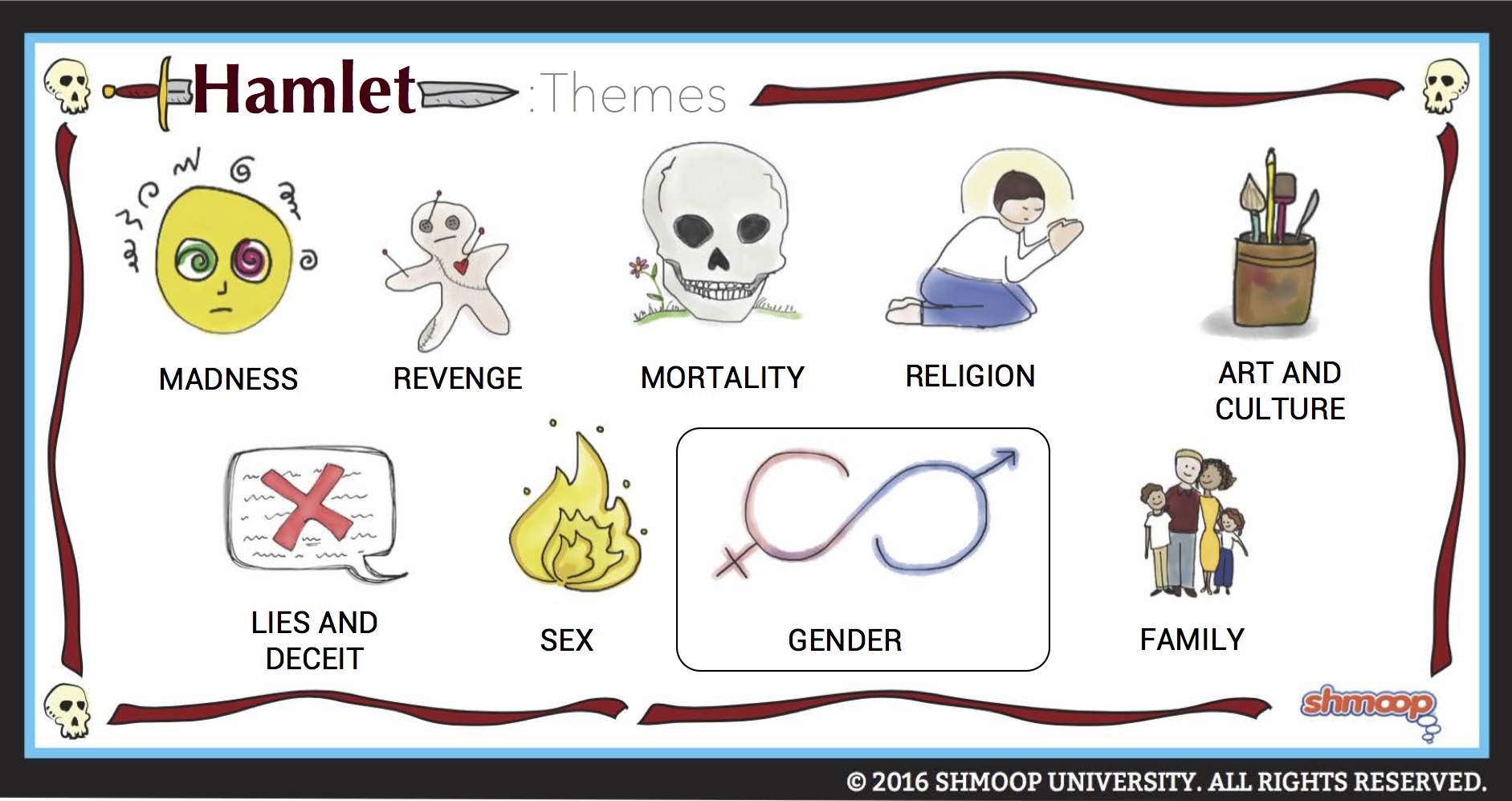
 (Click the themes infographic to download.)
"Frailty, thy name is woman" (1.2.6)—but Hamlet's men are pillars of stability and constancy, right? Right?? Well, maybe not. But Hamlet's attitude toward women is definitely sexist, and it stems from his disgust at his mother's sexuality and seeming unfaithfulness to his dead father. But the play doesn't seem to agree. Hamlet's mother's final guilt is left ambiguous, and we just end up feeling really bad about Ophelia. Hamlet's attitude toward women reveals more about him (and maybe men in general) than it does about women's true nature.
Questions About Gender
- What's Hamlet's attitude toward women? Why does he criticize women? Are these criticisms justified based on what he has seen and experienced?
- Do other characters in the play share Hamlet's attitude towards women? What kind of advice does Laertes give Ophelia in Act I, scene iii? What does his advice suggest about his attitude about gender roles? How does Ophelia respond to her brother's remarks? What does her response say about Ophelia's character?
- Why does Hamlet call himself a "whore," a "drab," and a "scullion" in Act II, Scene ii?
- Do you think Ophelia's limited social role (as a powerless young woman) plays any part in why she goes mad and drowns? What evidence would you use to support your claims?
- Does the play support Hamlet's criticisms of women? Or, does it challenge his views?
Chew on This
Hamlet is critical of women because he believes that their sexual "appetites" constantly lead them to betray men.
The play doesn't share Hamlet's sexist attitude. In fact, it paints a sympathetic picture of Ophelia and seems to blame the men for her tragic death.