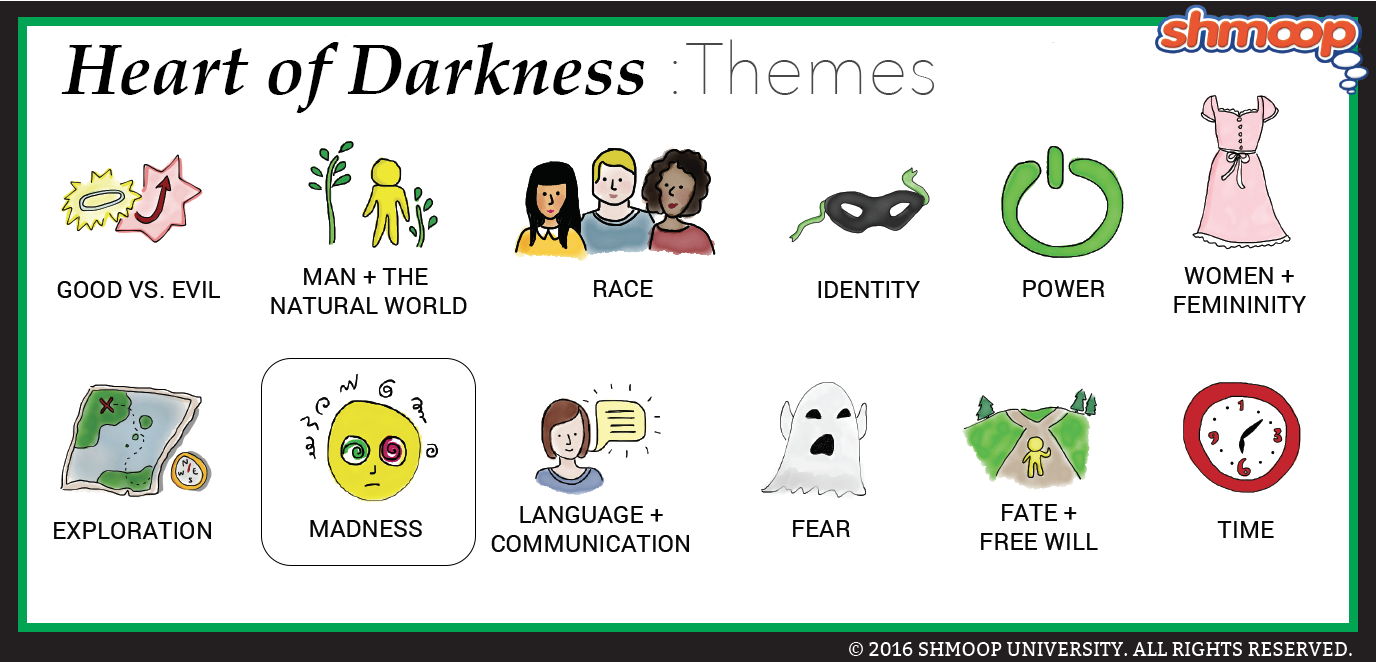
 (Click the themes infographic to download.)
There's method in this madness: Kurtz has gone from noble conqueror to deranged slaver because his power and greed have been totally unchecked. Ergo, if you want to stay sane, don't swoop into an African village and start passing yourself off as a god. Point taken. But that's where things start to get hazy. Is madness is just another name for imperialism—the idea that white men can swoop into Africa and claim it for themselves? Or is madness what happens when civilization tries to conquer the wilderness?
Questions About Madness
- How does Conrad define madness? How is Kurtz the ultimate embodiment of madness?
- What symptoms accompany the onset of madness in Heart of Darkness? What human faculties begin to break down? Does Marlow become a little crazy himself?
- Is madness caused by the trip up the Congo River and into the interior? Or is it something that is born into man, regardless of his environment? In other words, is madness caused by inherent nature or environment and experience?
- Can the harlequin be seen as a bridge between madness and sanity? How do his words make sense yet seem like folly to Marlow? How does Marlow relate to the harlequin? What does this say about Marlow's state of sanity?
Chew on This
Isolation and life in the wilderness cause Kurtz's madness; in other words, there is something inherently madness-inducing about the African interior.
One of Conrad's main messages is that madness is not caused specifically by living in the wilderness, but that the seeds of madness—ambition, obsession, and greed—are always present.