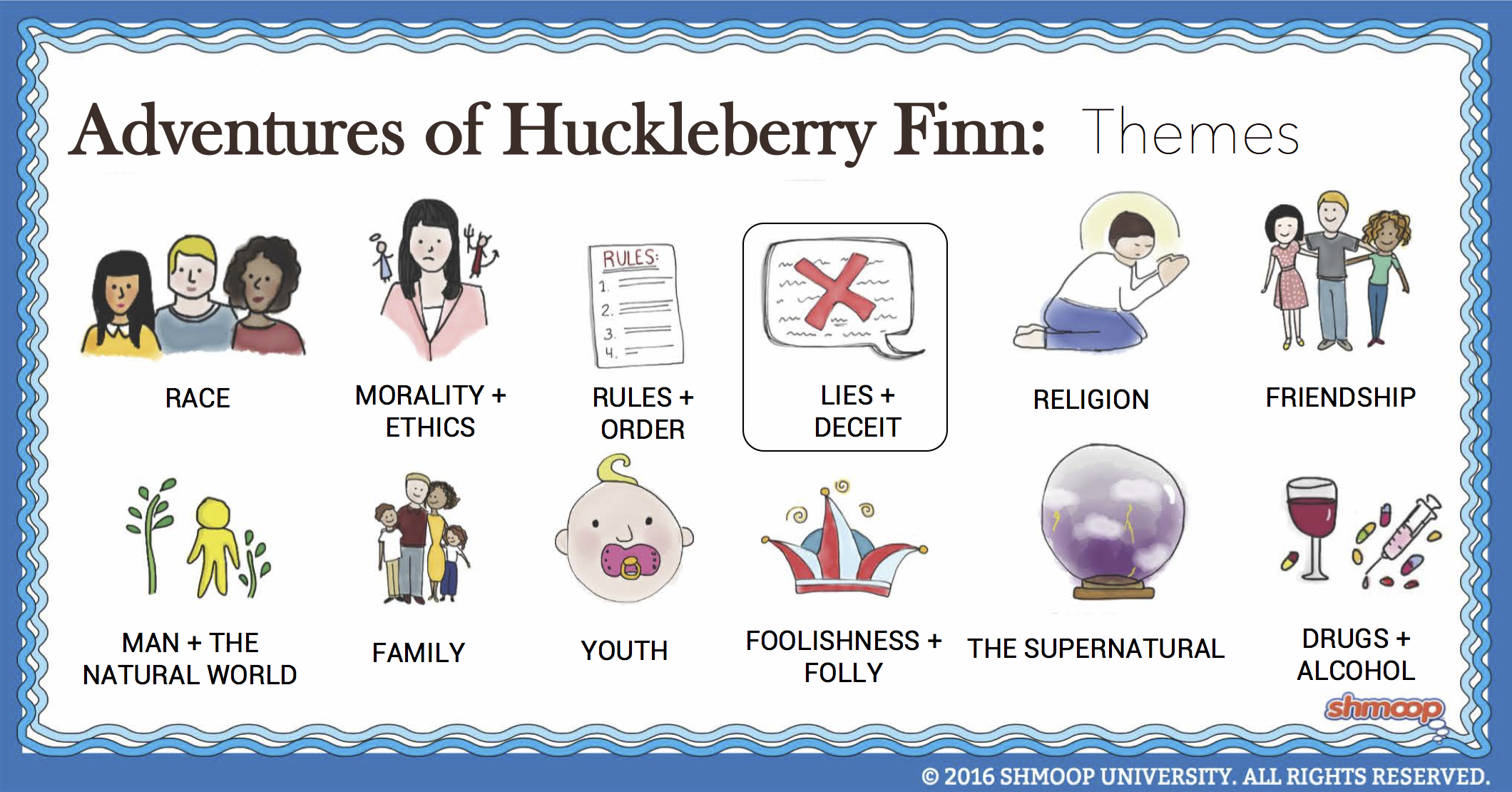
 (Click the themes infographic to download.)
When is a lie just a lie, and when it is a con? Thirteen-year-old narrator Huck Finn can hardly open his mouth without an untruth spilling out, but his lies are all for a good cause: getting Jim to safety. Conmen like the Duke and King, however, are just bilking innocent townspeople of their money. Their reward? A quick trip to the tar-and-feather brigade. So, where does The Adventures of Huckleberry Finn draw the line? Which lies are harmless (or even benevolent) untruths—and which ones are morally bankrupt deceptions?
Questions About Lies and Deceit
- Why does Huck enjoy lying so much?
- Ever notice how simple lies can end up really complicated? Why is that? Does Huck seem concerned about this at all?
- What's the difference between the way that Huck deceives and the way that the duke and king do? Can you really draw lines in the sand between "good" lying and "bad" lying in Huck Finn?
Chew on This
At first, Huck enjoys making things up. Through observing the duke and king, he eventually comes to realize the negative aspects of deceit.
Huck's stories involve elaborate descriptions of parents and siblings, and so they display his longing for a real family.