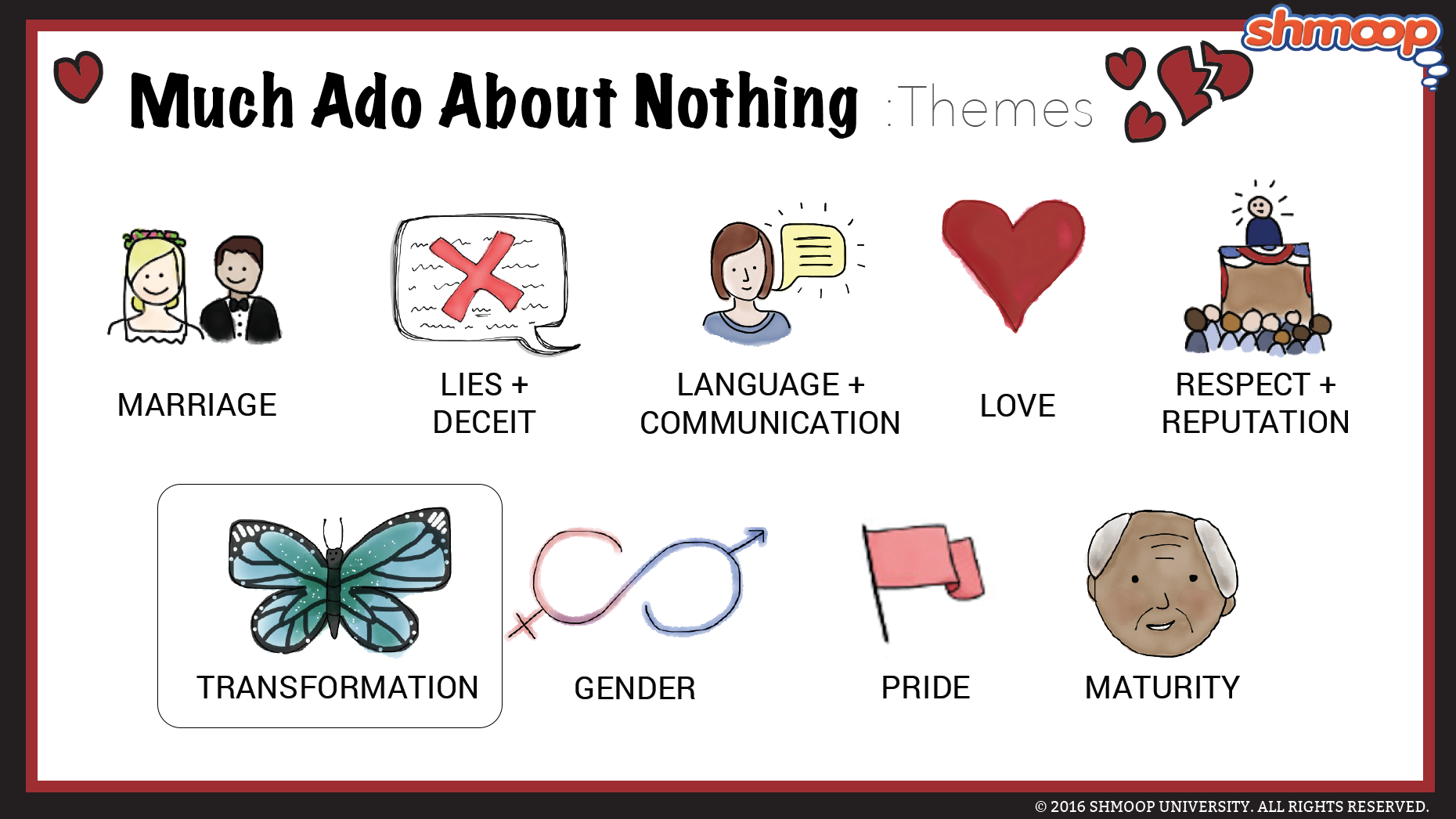
 (Click the themes infographic to download.)
Transformation is kind of bizarre in Much Ado About Nothing. Ultimately, the good characters stay good and the villain remains bad. It's not like Don John is cuddling puppies at the end of the play, or Hero is getting in fistfights.
There are, however, a lot of little changes that occur along the way, as the characters learn about themselves and each other. The largest transformations are characters moving from hating each other to loving each other... and vice versa. It’s also important that the characters begin their metamorphoses as a result of trickery or deception, both the mean-spirited and well-intentioned types. This deception tends to cause strong emotions, which ultimately drive the transformations.
Questions About Transformation
- Are any of the characters meaningfully transformed by the end of the play? Do Hero and Claudio grow at all?
- Are Benedick and Beatrice actually changed from haters into lovers? Were they secretly in love this whole time, making the whole falling-in-love thing more of a revelation than a transformation?
- Does Benedick’s loyalty truly change at all throughout the course of the play? Is it meaningful that the play began with a discussion of the battle in which Don Pedro, Benedick, Claudio were all allies? How does the relationship between these three men change through the play? Can things ever be as they once were between them?
- What brings Leonato back to Hero’s side after he’s already denounced her? If Claudio’s sudden hatred for Hero is understandable, how do we explain Leonato’s sudden hostility toward him? Does he really lose faith in his daughter and gain it back again?
- What makes Borachio suddenly decide to confess his crimes and repent them? Why doesn’t this happen with Don John? Which outcome is more believable? Why is Don John inexplicably evil, and why is he so hell-bent on not changing at all? Is this a cheap plot device?
Chew on This
Transformation is a plot device in the play, not a realistic portrayal of any believable or meaningful changes in the characters.
Masks are present as a potent symbol in the play because none of the characters have truly revealed what or who they are. The whole notion of "transformation" is just a misinterpretation; characters aren’t changing... they’re just revealing more of their true selves.