Character Analysis
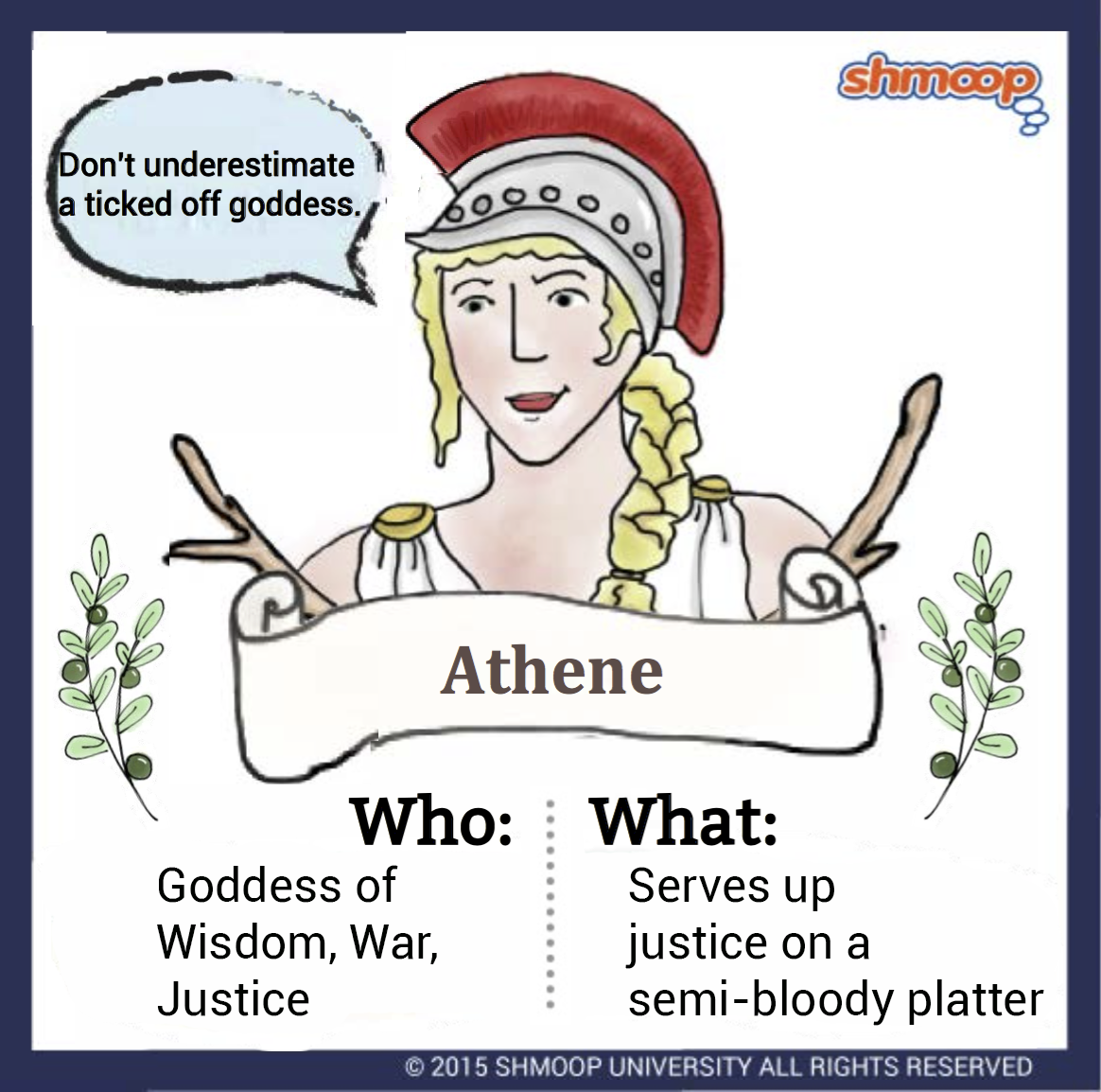
(Click the character infographic to download.)
Zeus' daughter Athene may be the patroness of warfare but she's also the goddess of wisdom, so it's no surprise that she likes a hero with some brains in him—namely Odysseus. And having Athene on your side is a definite plus: she helps him do everything from winning favors to devising plans to not dying to looking sexy.
Body Image
Just like Odysseus, Athene loves herself a good disguise, and she doesn't discriminate: little girls, young women, servants, and old men—she'll do them all. The whole thing even ends with a reminder about her disguise, telling us that the Ithakans were peaceful under her watch, "who had likened herself in appearance and voice to Mentor" (24.548).
If you ask us, this is a little weird. We get why she would appear in dreams to Penelope and disguise herself to talk to Nausikaa (probably a little freaky to have a god appear in your bedroom, not that we'd know), but why doesn't she just waltz into the Phaiakian city and tell Alkinoös that this man is Odysseus and can you help him please thank you?
We're not claiming to know the will or the gods or anything, but we do have a few ideas: (1) because it's fun and because she can. (2) It's a way of testing mortals, to see if they treat her well when she's disguised as one of them and if they can take care of business without her (apparent) help. (3) It her keep a low profile. That way, when you bust out by shining your divine aegis through the air, people know you mean business.
Get It Done
And does she ever mean business. Just look at how often Athene is able to get her own way, even in her interactions with the other gods, like when she gets Zeus to make Circe free Odysseus. And we really see Athene bust out the big guns is in the last third of the epic, when she becomes the incarnation of divine justice, spurring Odysseus on to kill the suitors—all the suitors, even the (relatively speaking) good suitor. Even he doesn't escape: "Athene had bound him fast, to be strongly killed by the hands and spear of Telemachos" (18.155-56).
What gives?
The goddess is clearly out for blood, but we should try not to read this as evidence that Athene is violence-crazed and unfair. In fact, it's just the opposite. Just look at Telemachos' post-slaughter insistence on hanging the maids, so as to give them the least honorable death possible. The characters believe this is the way justice is served: with a lengthy sword.
Permission to Approach the Bench
In the end, Athene's sense of justice is actually better than the alternative. Sure, it involves some bloodshed. But it also gets us away from random, vengeful killing and toward some sense of, you know, actual justice. At the end, she tells the Ithakan men to "hold back … from the wearisome fighting, so that most soon, and without blood, you can settle everything" (24. 531-32). For Athene, some blood is fine—even necessary. But not too much.
Athene's Timeline