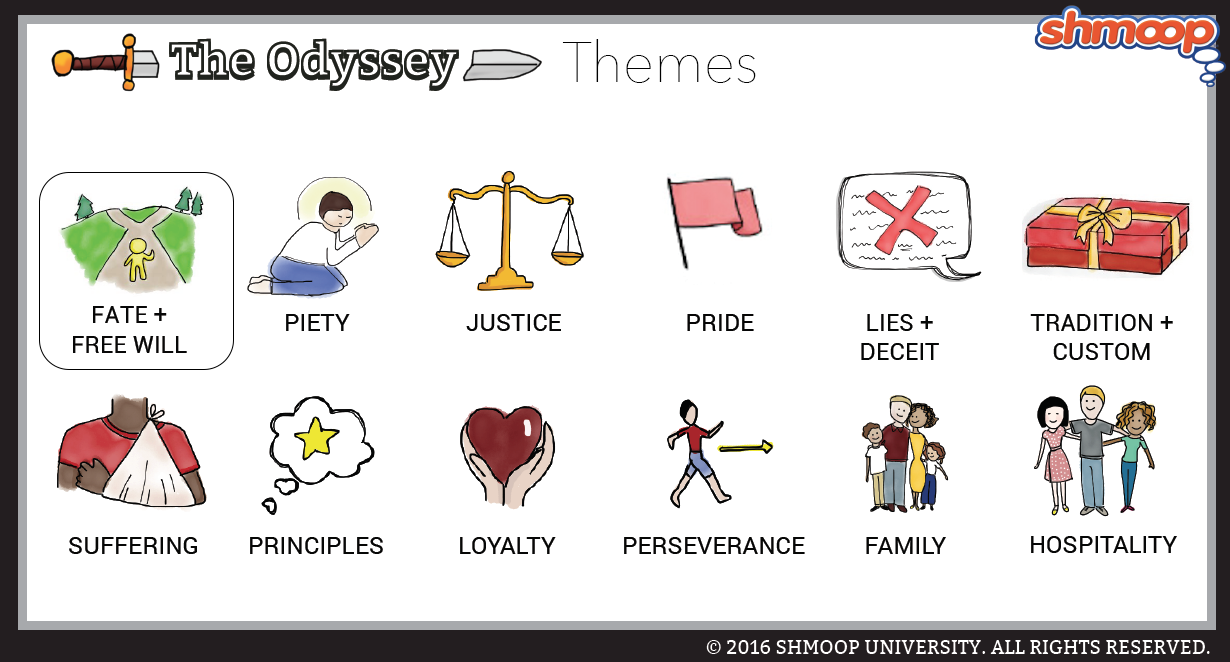
 (Click the themes infographic to download.)
The characters in the Odyssey are definitely not free to be you and me. Their destinies are just that: destiny, and there's not much room to change what's going to happen. Still, there is a way to change how they get there. Fate and free will aren't mutually exclusive, and even the gods have a lot of leeway in how they bring about what's fated. (Not to mention that they're subject to all the same fickleness of human emotion that we are). Add it all up, and you get a pretty flexible notion of just what "fate" means.
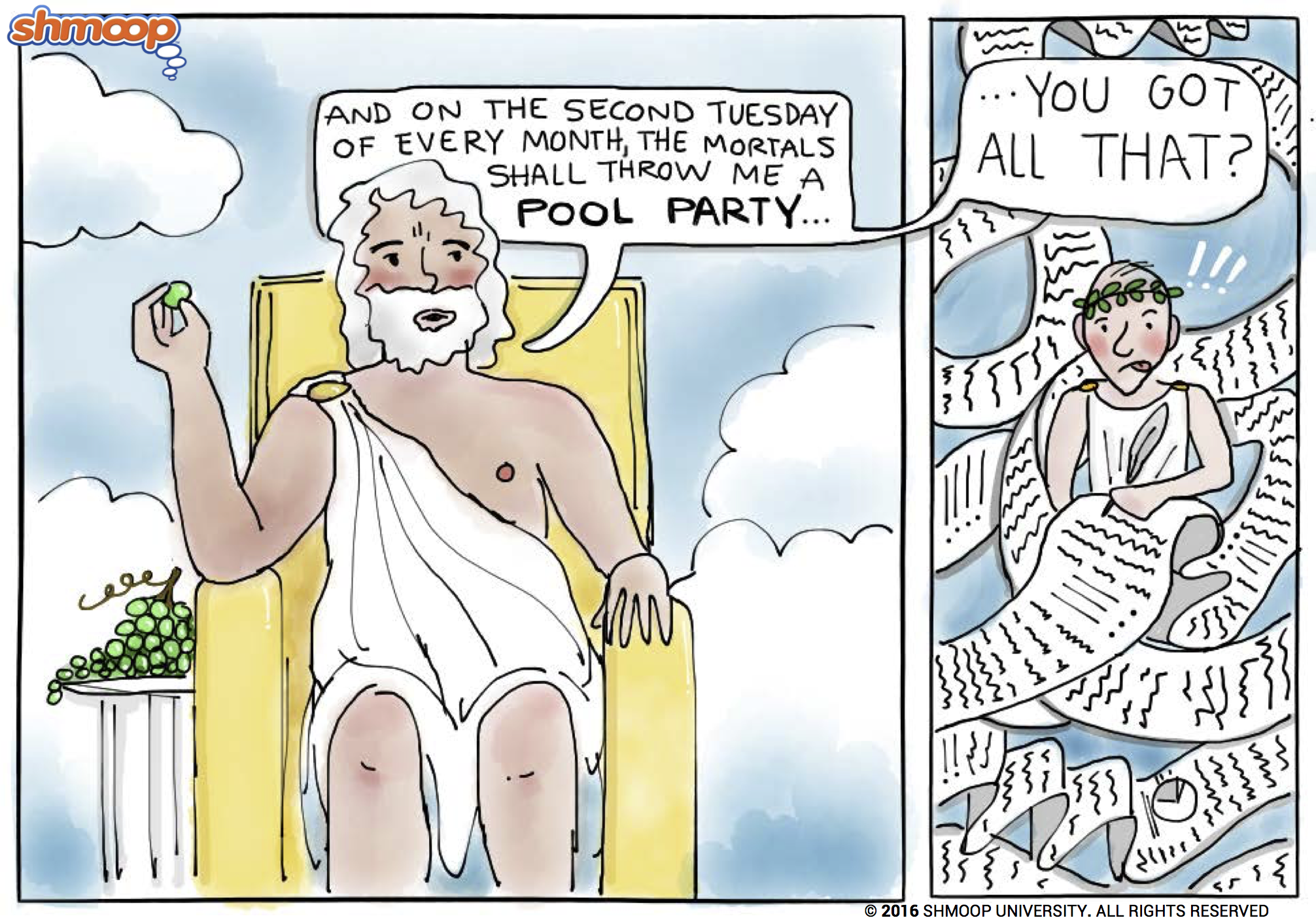 (Click the infographic to download.)
Questions About Fate and Free Will
- It's clear that Odysseus is responsible for his own actions, like telling Polyphemos his name. It's also clear that certain events are fated to happen from the start. How are both of these possible in the Odyssey?
- What is the difference between "fate" and "luck" in the Odyssey? When do the characters ascribe events to the former, and when to the latter, and why? (And is "fate" always bad? Does it every seem to do good for anyone?)
- At what point does divine intervention strip the characters of their ability to act and think for themselves? Can we draw much of a line between, say, the ideas that Athene puts in Odysseus' head and the ideas that he devises on his own?
Chew on This
In The Odyssey, fate never seems to bring about anything good.
In The Odyssey, free will is simply an illusion. Even the choices that men make are guided by events outside their control.