Symbolism, Imagery, Allegory
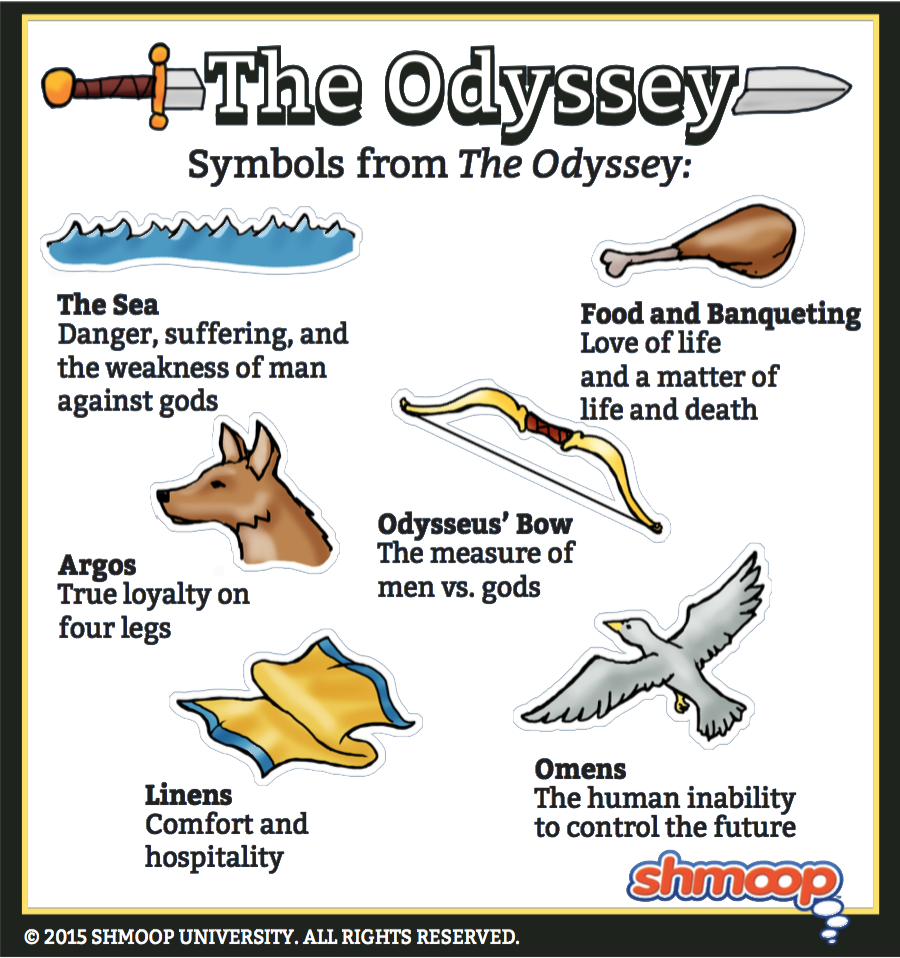
(Click the character infographic to download.)
What isn't an occasion for a feast in the Odyssey? Whether they're feasting on poisoned witch-food, Helios' cattle, or lotus fruit, Odysseus' men are constantly eating; and Telemachos has to literally avoid Nestor so he doesn't have to attend any more feasts; and even the suitors endlessly gorge themselves.
We already know that hospitality is super important in the world of the Odyssey (see our "Theme" section for more on that), and we get another clue when Eurylochos tells us that "hunger is the sorriest way to die and encounter fate" (12.341). It's ignoble: he sees it as being "pinched to death" (12.351). Better to go out fighting—or feasting—than to die slowly of hunger.
So in one sense, feasting represents a kind of heroic attitude toward life. Instead of just sitting around and waiting to die, the heroes of the Odyssey want to live life fully. At the same time, food is a way to show that you understand and respect the rules. When it's time for dinner at Eumaios' house, Homer takes his time describing it:
The swineherd stood up to divide the portions, for he was fair minded, and separated all the meat into seven portions. One he set aside, with a prayer, for the nymphs and Hermes, the son of Maia, and the rest he distributed to each man, but gave Odysseus in honor the long cuts of the chine's portion of the white-toothed pig, and so exalted the heart of his master. (14.432-438)
This is serious business. In more ways than one, food is a matter of life and death.
