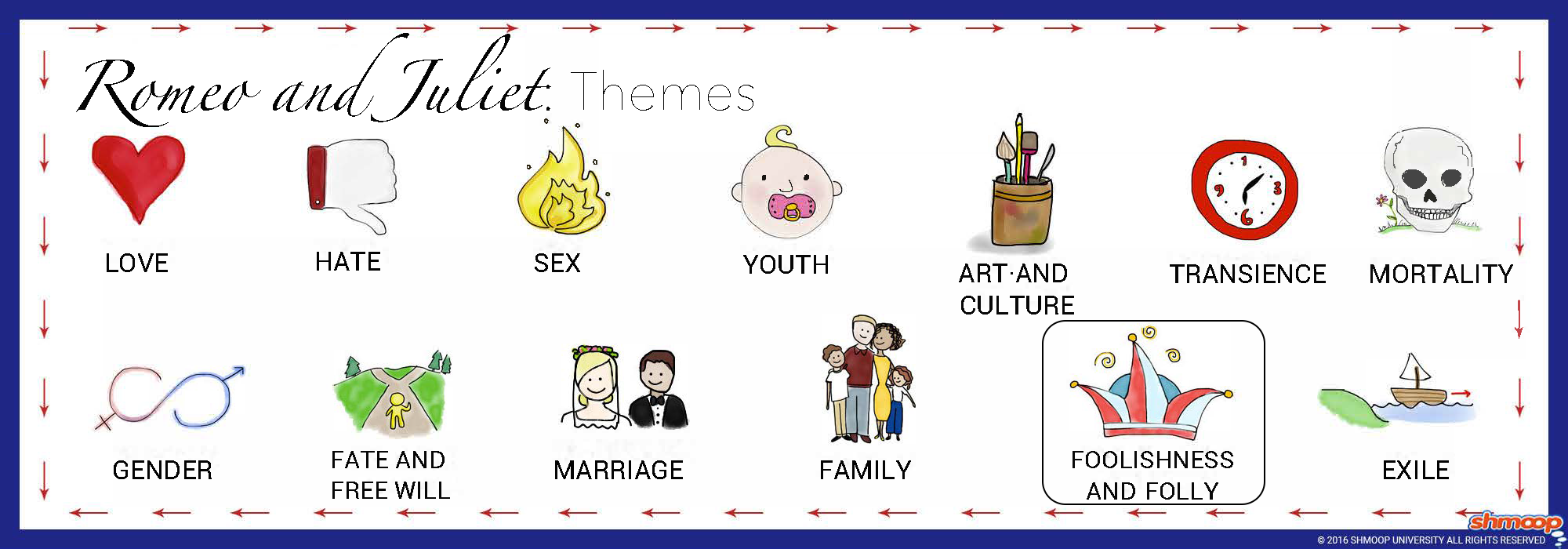
 (Click the themes infographic to download.)
Friar Laurence might warn Romeo to move "Wisely and slow—they stumble that run fast" (2.4.94), but nobody (including Friar Laurence) spends much time pausing to think in Romeo and Juliet. Love and hatred propel the characters to immediate and frankly kind of dumb actions. Thinking Juliet is dead, Romeo kills himself—but if he'd waited just a few minutes longer (or, you know, recited a few more lines of poetry), he would have discovered that Juliet was actually alive. It may be dumb kids who die, but the foolishness of those who are supposed to be older and wiser has a lot to do with the play's tragic end.
Questions About Foolishness and Folly
- Which characters are guilty of acting hastily or foolishly in the play? What are the consequences of refusing to act "wisely and slow"?
- Does the play ever critique the Capulet/Montague feud?
- Why does Romeo commit suicide, exactly? What happens just moments after he takes his life?
- In the last lines of the play, the Prince says, "Some shall be pardon'd, and some punished" for their roles in the tragedy. To which characters do you think he refers?
Chew on This
The play suggests that the long-standing Capulet/Montague feud is completely ridiculous—it's not clear what caused the feud to begin with and its consequences (the deaths of Romeo and Juliet) are senseless.
Although the Friar warns against rash and foolish behavior on more than one occasion in the play, he's just as guilty of folly as anyone else.