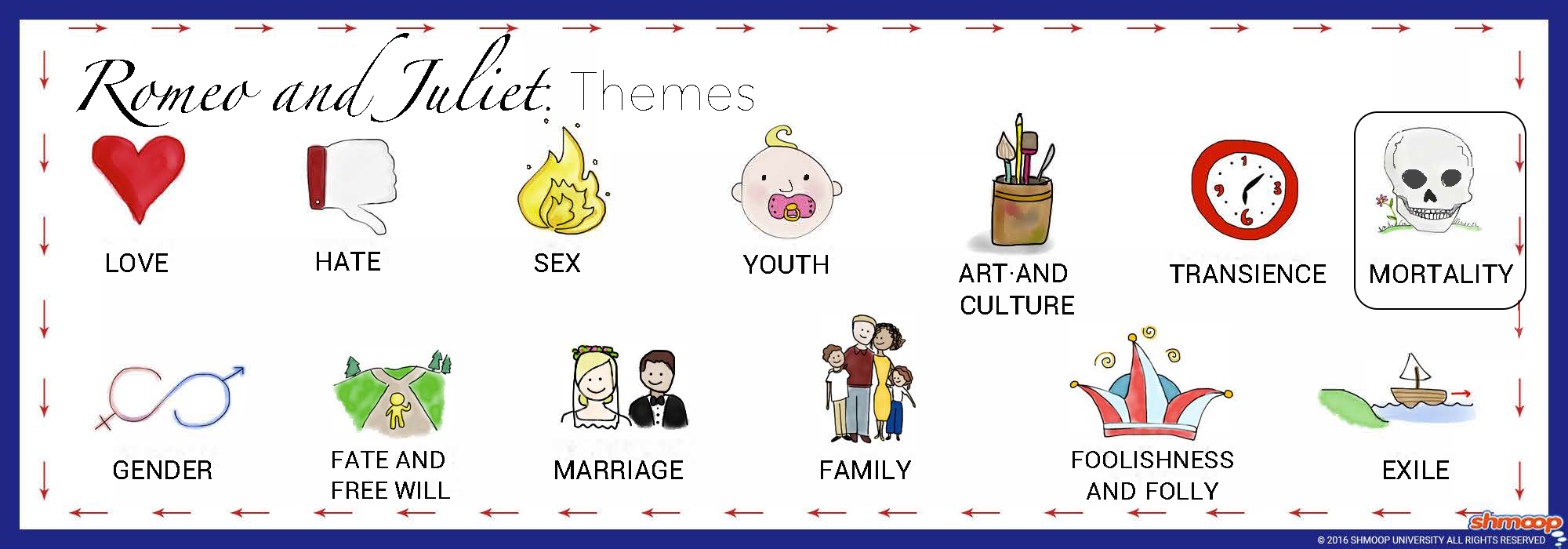
 (Click the themes infographic to download.)
There's nothing sexier than contemplating your own mortality, right? Well, for Romeo and Juliet, the answer is … actually, yes. Death is never far in the background of Romeo and Juliet. The ancient feud between the Montagues and Capulets puts their "forbidden" relationship in constant danger—and not just the danger of being grounded. Danger of death. This threat lets Shakespeare link death and sex throughout the play so that the suicide becomes an erotic act that both consummates the lovers' passion and (re)unites them in death. Hm. On second thought, we'll stick to pretending that we're immortal.
Questions About Mortality
- Is death presented as glamorous or even desirable in Romeo and Juliet?
- Which characters, if any, are to blame for other characters' deaths?
- What parallels are drawn between love/sex and death in Romeo and Juliet? Why do Romeo and Juliet's descriptions of love so often refer to death?
- Does a love as passionate as Romeo and Juliet's necessarily have to end in death? Is death an integral component of their relationship?
Chew on This
In Romeo and Juliet, passionate people are doomed to an early death.
Romeo and Juliet's love is so overpowering that death, not sex, is the only way they can fully consummate their relationship.