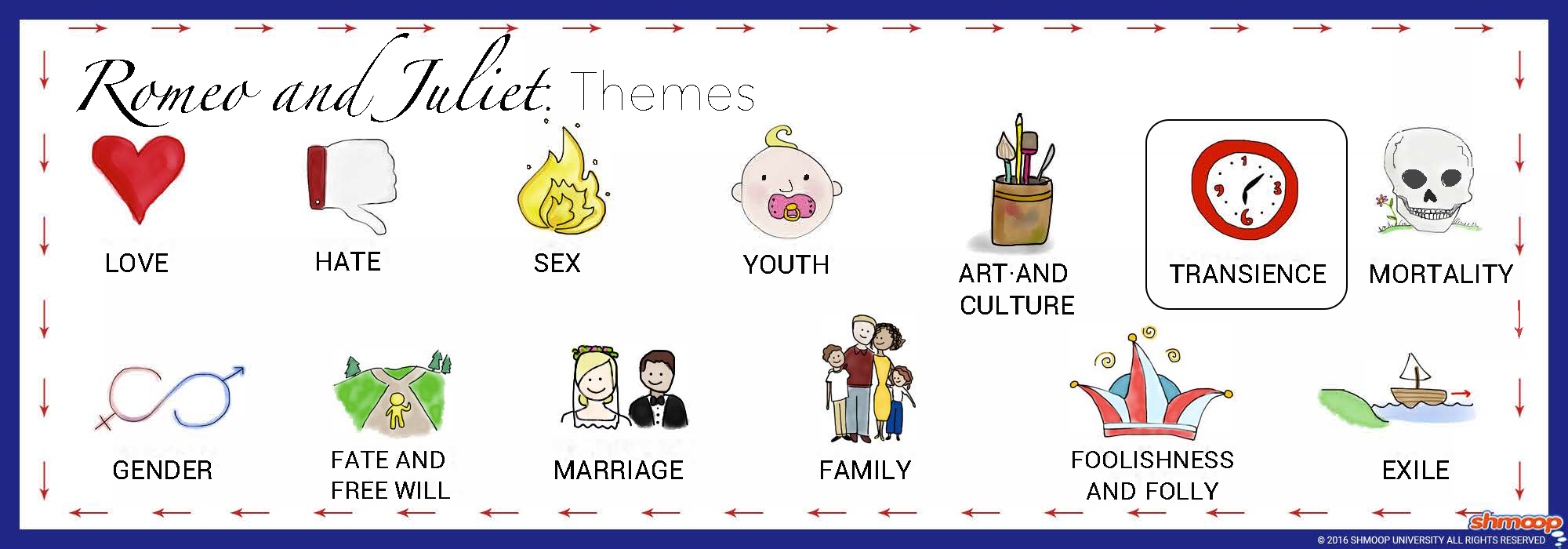
 (Click the themes infographic to download.)
Talk about a whirlwind romance: Romeo and thirteen-year-old Juliet fall in love at first sight, marry within twenty-four hours, and die in each others' arms only days later. Is this basically the equivalent of a middle school romance? Or does the short timeframe clue us into some deeper message about the fleeting nature of time and youth? (We're leaning toward the deeper message.)
Questions About Transience
- How do the motifs of light and darkness in the play support the theme of transience?
- How does the play's awareness of time (and its passage) impact the way we interpret Romeo and Juliet's youthful love?
- Does the transient nature of Romeo and Juliet's love make it more precious?
- Do you think Romeo and Juliet's love is ultimately conquered by death, or does their love become immortal when they die together?
Chew on This
Try on an opinion or two, start a debate, or play the devil’s advocate.
Romeo and Juliet's love lacks power because it does not last. Their love ends with their death.
Romeo and Juliet make their love immortal by dying together—or rather, Shakespeare makes it immortal by writing about their suicide.