Symbolism, Imagery, Allegory
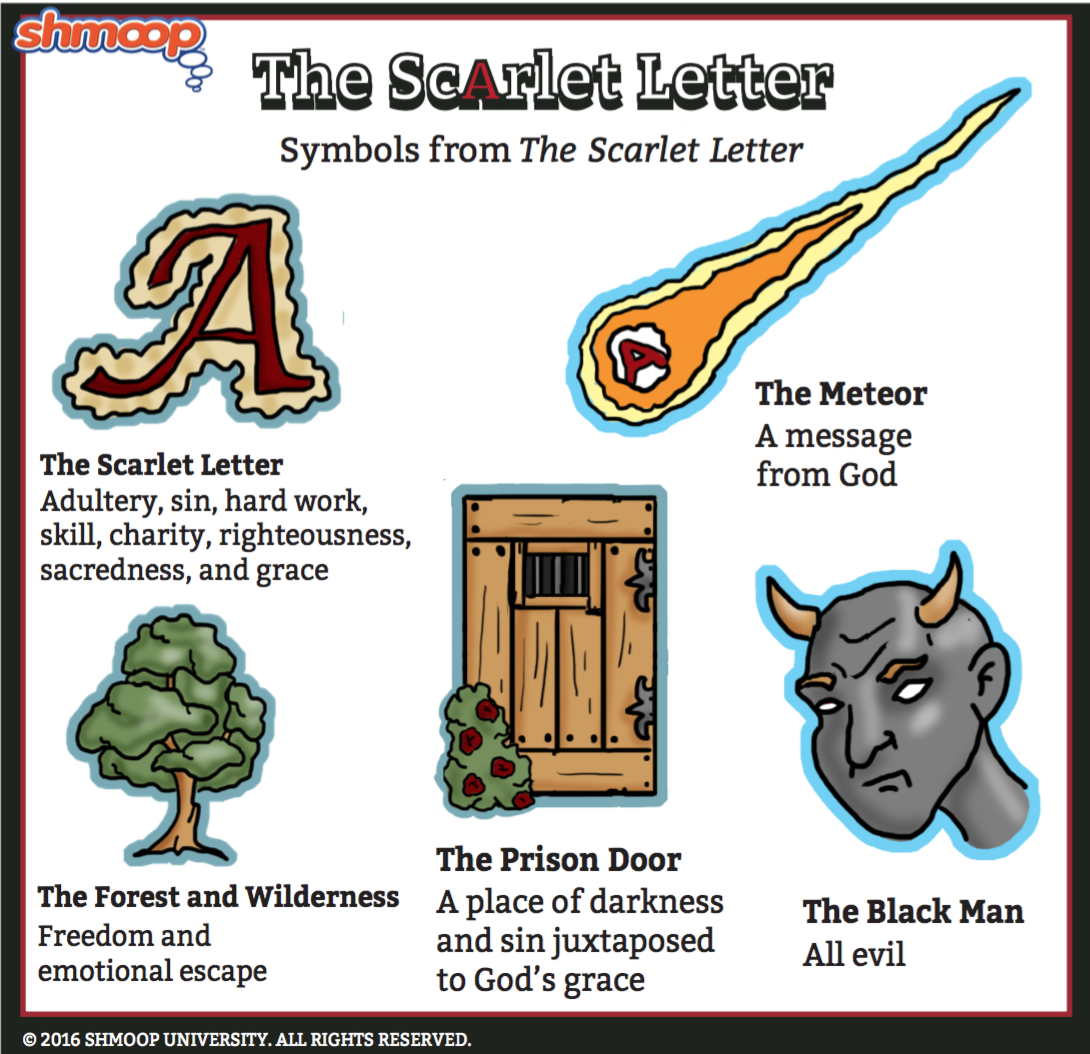
(Click the symbolism infographic to download.)
If you snoozed through the little introductory appetizer to The Scarlet Letter, we won't tell. (Shmoop will never tell.) The language is particularly thorny—which is saying a lot—and it's hard to make out why exactly this introduction is so important. So let's break it down.
CEO
In "The Custom-House," we find out that our narrator is the chief executive officer of the Salem Custom-House sometime during the mid-1800s). His account is a mixture of fact and fiction and loosely follows the story of how Hawthorne himself came to write The Scarlet Letter.
A Custom House is a governmental building situated near a port or a wharf. All sailors, sea captains, merchants, and sea traders are required to report directly to the Custom when they land to pay tax on their imported goods. Things aren't so hopping in this particular Custom House in Salem—business has slowed down and the building itself is falling apart. The narrator describes a statue of the American eagle (i.e., bald eagle) that hovers over the Custom House entrance:
Over the entrance hovers an enormous specimen of the American eagle, with outspread wings, a shield before her breast, and, if I recollect aright, a bunch of intermingled thunderbolts and barbed arrows in each claw. With the customary infirmity of temper that characterizes this unhappy fowl, she appears, by the fierceness of her beak and eye, and the general truculency of her attitude, to threaten mischief to the inoffensive community. […] But she has no great tenderness, even in her best of moods, and, sooner or later—oftener soon than late—is apt to fling off her nestlings, with a scratch of her claw, a dab of her beak, or a ranking wound from her barbed arrows. (Custom House.3)
Yikes. We all know the eagle is one of the most famous and beloved symbols of America and of the freedom that America represents. Here, however, we get the image of a very unwelcoming and unfeeling symbol, one that doesn't care whether you survive or not. In other words, have all the freedom you want—including the freedom to die uncared for. This eagle seems to represent the attitude of the Puritans—who are perfectly happy to kick you out of the nest as soon as you make any movement.
Honored Ancestors
We also find out that the narrator has a particular interest in this story, because his ancestors were none other than those hateful Puritans, who were involved in both the Salem Witch Trials as well as in the persecution of Quakers. Needless to say, the narrator feels mighty guilty and mighty weirded out by his unpleasant ancestors.
One day, our speaker comes across a scarlet letter A and its history, written by a former official. He wants to write his own version of this incredible story, but has major writer's block—until he gets fired, finds himself scorned and rejected by his former employees, and suddenly feels a connection Hester Prynne. Lucky break! He writes the book—and sticks this preface on to warn his readers that, before they all start themselves on the back for being nicer than their ancestors, they'd better be sure that they've really better. Because they're probably not.
But surely by the 21st century we've gotten over that hateful Puritan legacy, right? Right??
