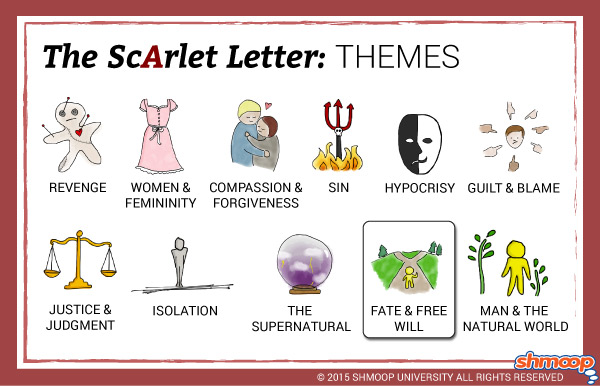
 (Click the themes infographic to download.)
From the minute you wake up, your life is full of choices: get out of bed, or hit the snooze button? Use the cinnamon or the mint flavored toothpaste. Cereal or eggs for breakfast? Etc. But if you're a Puritan, you believe your entire life is governed by Divine Providence: God controls every aspect of life—and your nation's life. So, obviously, the Puritans were constantly looking for messages and signs from God, letting them know what's on the horizon. Characters in The Scarlet Letter constantly struggle between letting fate run its course and choosing a path for themselves. The one advantage to being ostracized is that you just might get to decide your own fate.

Questions About Fate and Free Will
- Do any of the character actually believe they're exercising free will? Who? When?
- Does Hester believe in fate or in free will? Do her beliefs change over the course of this story?
- Is Dimmesdale's refusal to publicly declare himself to be Pearl's father a result of fate or free will?
- What do the characters mean when they refer to "Providence"? Why do they say "Providence" instead of "God," or some other name?
Chew on This
Hester believes she is fated to wear her scarlet letter for the rest of her life.
Dimmesdale's final act of confession is an act of free will.