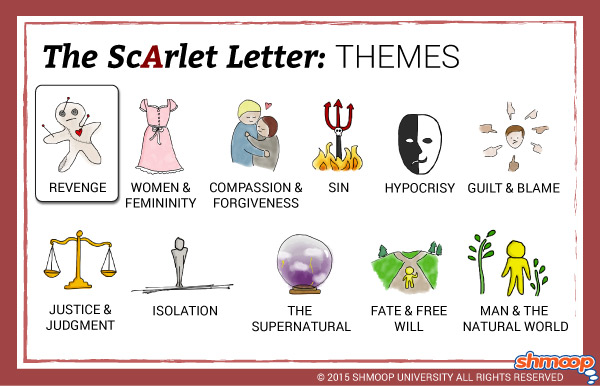
 (Click the themes infographic to download.)
Revenge is a dish best served cold. (And with a side of fries. But isn't everything best served with a side of fries?) Roger Chillingworth seems to agree, as you can no doubt tell by the extremely frosty fake name that he chooses. He spends seven years psychologically torturing Hester's lover Dimmesdale, keeping him alive just so he can squeeze out just… a… little…. more vengeance. Unfortunately, revenge in The Scarlet Letter is also served with an unexpected side: the loss of humanity. It turns out that God is the only one who gets to do the revenging around these parts, and he's got a little surprise for our anti-hero.

Questions About Revenge
- Why does revenge end up making Chillingworth evil? Was he always a little evil, or does the revenge actually twist his soul around?
- Is Hester's scarlet letter a form of revenge? What's the difference between revenge and punishment?
- Can a community take revenge, or is revenge an individual act? What forms of revenge do communities take? What position does The Scarlet Letter seem to take on the issue of old-fashioned public shaming (wearing letters, being paraded through towns) and acts of punishment like imprisonment, which is the way we deal with wrong-doers today?
Chew on This
The Scarlet Letter suggests that revenge is a dish best served by God.
Chillingworth redeems himself with his final act, giving Pearl and Hester the money they need to escape their community.