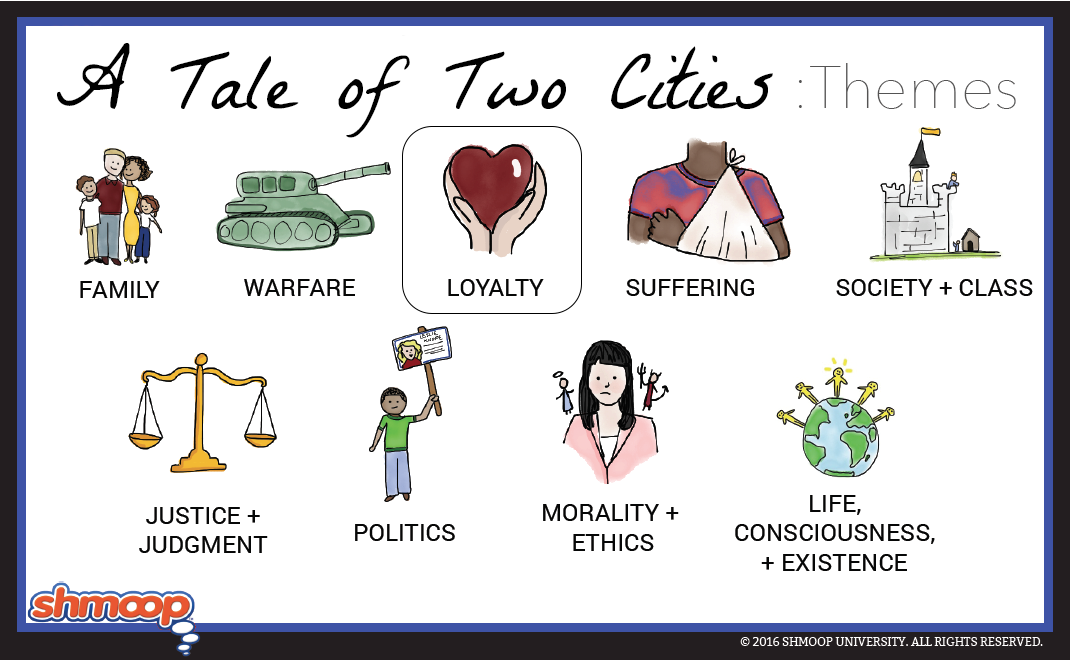
 (Click the themes infographic to download.)
War seems to test the limits of all sorts of ties. Your loyalties to family, friends, and even the institutions you believe in suddenly come into question. Just how much are you willing to sacrifice for the good of the nation? Does the nation come before your family? Before your own life?
In A Tale of Two Cities, Dickens forces his characters into situations that demand answers to exactly these questions. As we see, there aren’t ever any simple answers—and during a massive social uproar there’s rarely a time when anyone emerges unharmed. Characters learn how to honor the promises and the relationships that matter to them, even when those promises seem impossible to uphold.
Questions About Loyalty
- Is Miss Pross’s die-hard loyalty believable?
- Why does Mr. Lorry devote himself to Tellson’s?
- Is Mrs. Cruncher actually disloyal to her husband? Why or why not?
Chew on This
Mr. Lorry’s refusal to be completely devoted to business becomes an allegory for the good-heartedness of the British people as a whole.
In A Tale of Two Cities, religion becomes nothing more than a punch line for Dickens’s jokes: economics, not morality, will prevent a revolution in England.