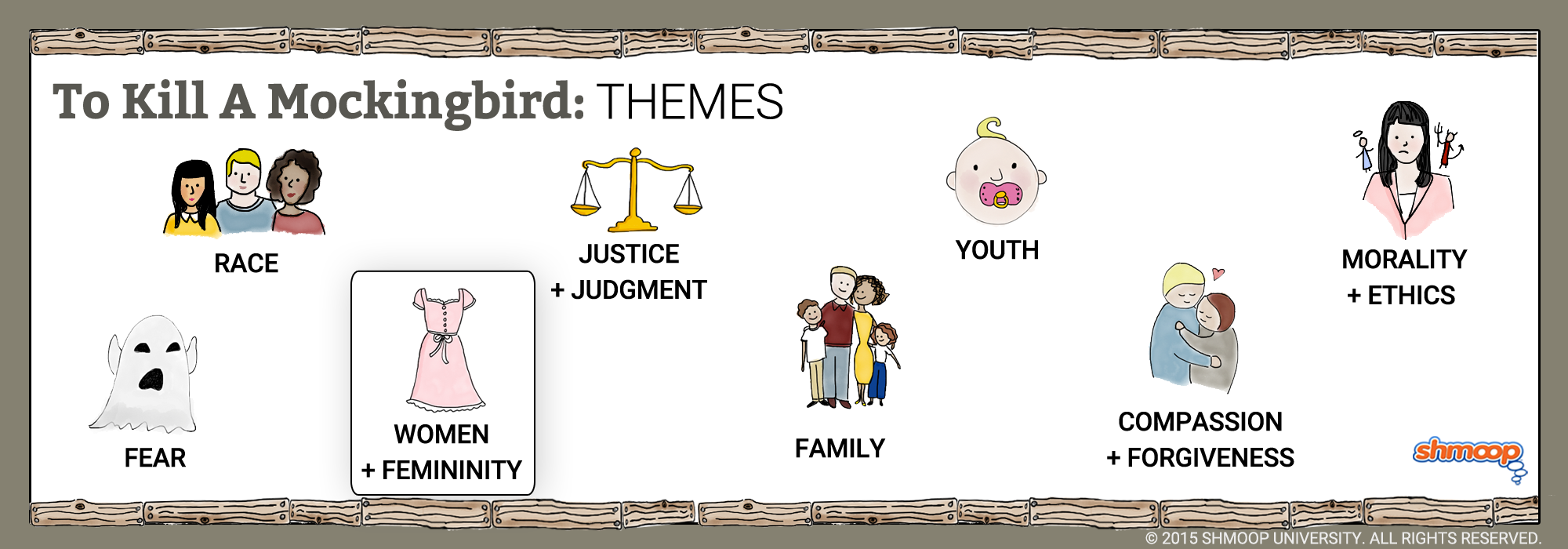
 (Click the themes infographic to download.)
Being called a girl is about the worst thing possible—or so thinks Scout, the female protagonist of To Kill a Mockingbird. Girls wear frilly pink dresses, and don't get to play outside, swear, or pretty much do anything fun. And they have to grow up to be ladies, which means being plunged into a confusing world where no one says what they mean. Scout's in for a big lesson, though: thanks to the examples of radical chicks Aunt Alexandra and Miss Maudie, she learns that being a lady can take as just as much courage as being a wild tomboy. Even if you have to wear a dress while doing it.

Questions About Women and Femininity
- Why does Scout take being called a girl as an insult? Would she have felt differently if she had an older sister instead of a brother? Why are there no other little girls in the novel?
- What effect does not having a mother have on Jem and Scout? Is Calpurnia a female role model for Scout, or does Scout just see her as "black" rather than as a woman?
- Why does being a lady require different skills than being a gentleman? Is there any overlap?
Chew on This
To Kill a Mockingbird suggests that questioning the "polite fiction" of "Southern womanhood" (15.39) could undermine not just gender attitudes, but racial ones as well.
Scout is reluctant to be feminine because she wants to grow up on her own terms. She sees femininity as a trap, and she doesn't understand that masculinity is governed by just as many rules.