The Fellowship of the Ring is pretty clear-cut about who is bad (the Ringwraiths, the Balrog) and who is good (all those shiny elves). But in The Two Towers, it gets a little more complicated. You have good people who give in to temporary temptation (Boromir), good people who fall for bad advice (Théoden), and even bad people who serve the good side (Gollum, at least for a little while). Tolkien's work has gotten a lot of criticism over the years for being too black-and-white about moral issues. But we think The Two Towers depicts a more interesting moral world than just Dark versus Light. While this novel still shows the fight between forces of good and evil, Tolkien allows for some grey areas to develop which gives The Two Towers a nice dose of complexity.
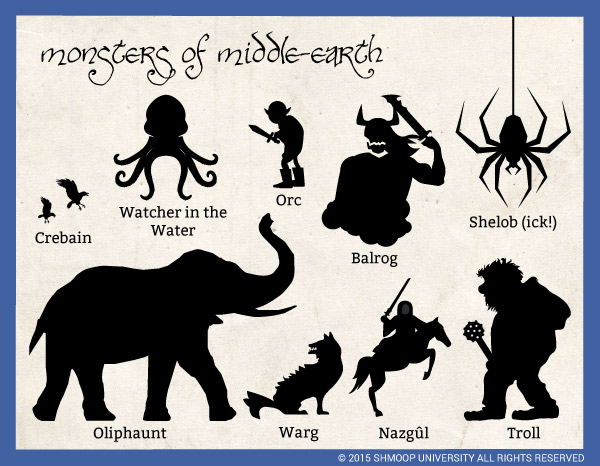
(Click the infographic to download.)
Questions About Good vs. Evil
- How does Tolkien attempt to portray a grey area between Good and Evil? What moral ambiguities does he present in The Two Towers? Do any of the characters seem particularly morally ambiguous?
- The Two Towers includes a lot of both moral corruption and redemption. For example, Saruman starts good and grows evil, while Boromir makes a major moral mistake and then redeems himself. Under what conditions in The Two Towers can you become good or become evil? Are there characters who are naturally good or evil and who cannot change?
- What characters represent the extremes of good and evil in The Two Towers? What does their characterization tells us about the novel's understanding of the best and worst human traits?
- If Sauron is so evil, how did he get that way? Do you think not knowing why the Big Bad is so, well, Bad interferes with the moral issues in the story?
Chew on This
Greed is the root of all evil in The Two Towers. The novel presents the relatively conservative view that everyone should be happy with what they have.
Tolkien emphasizes the importance of moral redemption by making the case that acting good in the moment is more important than starting out good.