ShmoopTube
Where Monty Python meets your 10th grade teacher.
Search Thousands of Shmoop Videos
AP U.S. History Videos
Play All
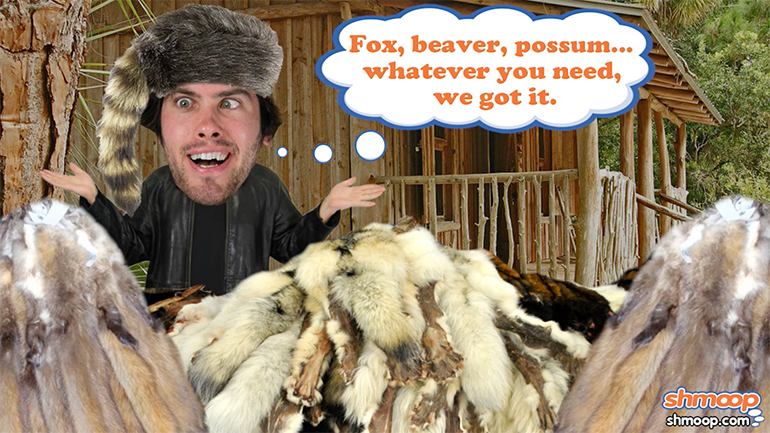
AP U.S. History 3.1 Period 2: 1607-1754. Which of the following contributed most directly to the process seen in the image?
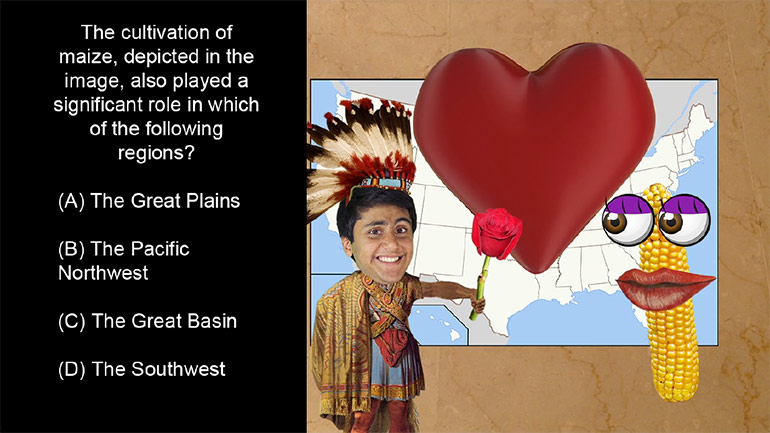
AP U.S. History Period 1: 1491-1607 Drill 3, Problem 2. The cultivation of maize, depicted in the image, also played a significant role in which of...

AP U.S. History 3.2 Period 4: 1800-1848. The goals presented in the excerpt have the most in common with which of the following?
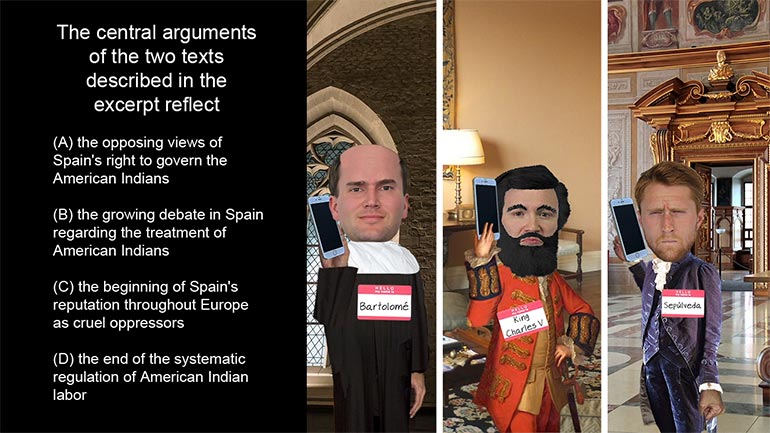
AP U.S. History 3.3 Period 1: 1491-1607. The central arguments of the two texts described in the excerpt reflect...what?
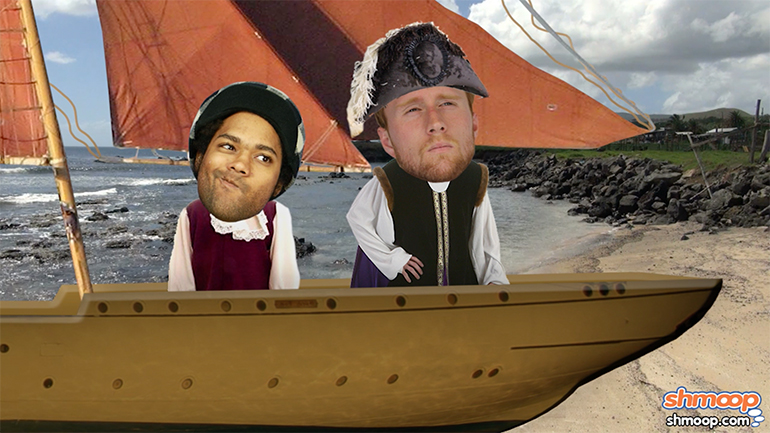
AP U.S. History 3.3 Period 2: 1607-1754. The direct effect of the process depicted in the image was...what?

AP U.S. History 3.3 Period 4: 1800-1848. Which of the following best describes the public reaction to movements like the one described in the excer...

AP U.S. History 3.4 Period 2: 1607-1754. The description in the excerpt most directly reflects what?
AP U.S. History 3.5 Period 5: 1848-1877. The Emancipation Proclamation was a continuance of which of the following developments?

AP U.S. History 4.1 Period 2: 1607-1754. The Gustavus Vasa except reflects what?
AP U.S. History 4.1 Period 4: 1800-1848. Which of the following contributed most directly to the development described in the excerpt?
AP U.S. History 4.2 Period 4: 1800-1848. One direct effect of the trend described in the excerpt was...what?
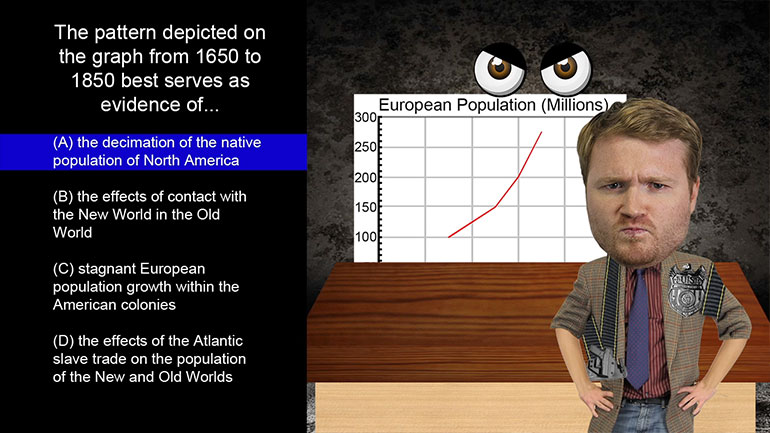
AP U.S. History 4.3 Period 1: 1491-1607. The pattern depicted on the graph from 1650 to 1850 best served as evidence of what?
AP U.S. History 4.3 Period 4: 1800-1848. The development described in the excerpt has the most in common with which of the following?
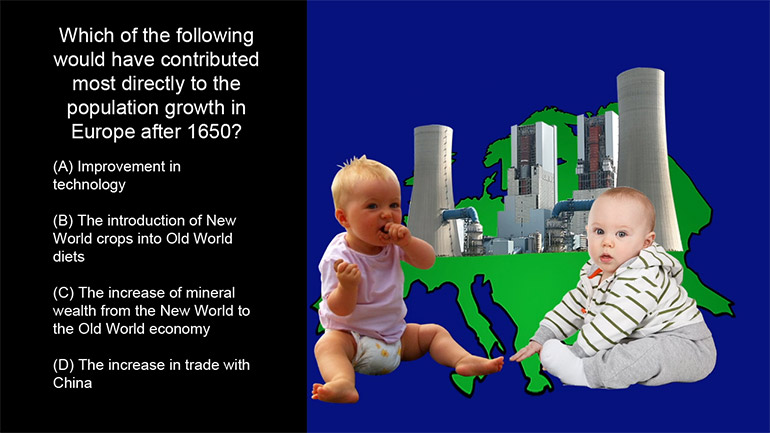
AP U.S. History 4.4 Period 1: 1491-1607. Which of the following would have contributed most directly to the population growth in Europe after 1650?
For us at Shmoop, dramatic change means eating something other than a bologna sandwich, 4 carrots, and a juice box for lunch. Taco Tuesday is a big...
AP U.S. History Diagnostic 1. Relationships like the one shown in the image resulted in the development of...what?
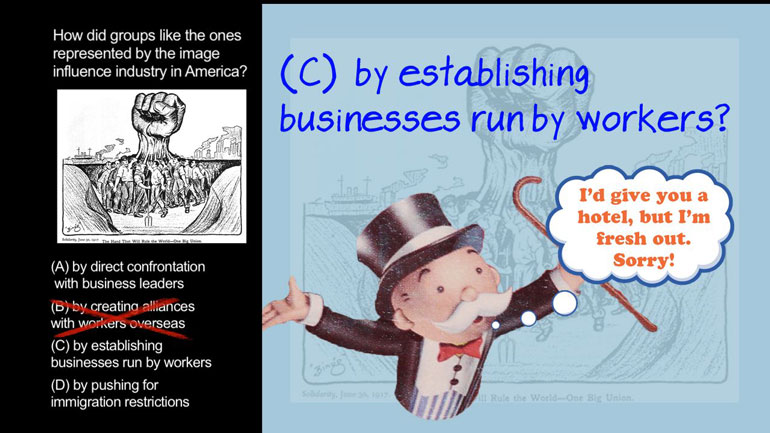
AP U.S. History Diagnostic 15. How did groups like the ones represented by the image influence industry in America?
AP U.S. History Diagnostic 10. What led to the splintering of the political parties shown in the image?
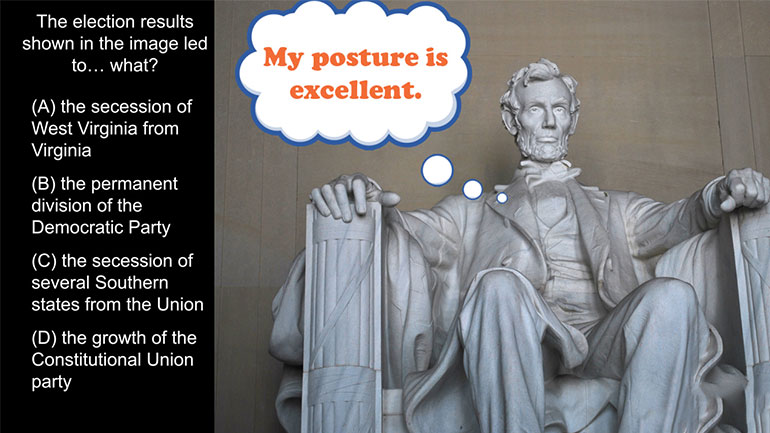
AP U.S. History Diagnostic 11. The election results shown in the image led to...what?
AP U.S. History Diagnostic 12. How did the Reconstruction Acts open up political opportunities for former slaves?