ShmoopTube
Where Monty Python meets your 10th grade teacher.
Search Thousands of Shmoop Videos
AP European History Videos 26 videos


AP European History 1.5 Period 1: 1450-1648. Machiavelli's The Prince was similar to Thomas More's philosophy because it...what?
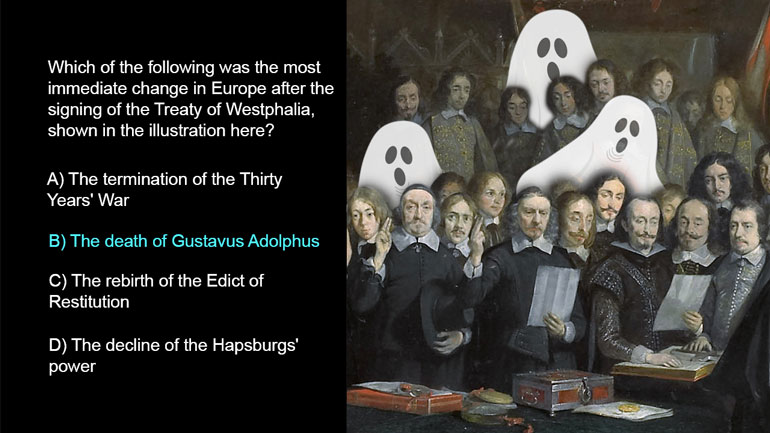
AP European History 2.3 Period 1: 1450-1648. Which of the following was the most immediate change in Europe after the signing of the Treaty of West...

AP European History 2.2 Period 1: 1450-1648. The man portrayed in the image was previously motivated to tack the Ninety-five Theses on the doo...
AP European History 1.1 Period 2: 1648-1815 83 Views
Share It!
Description:
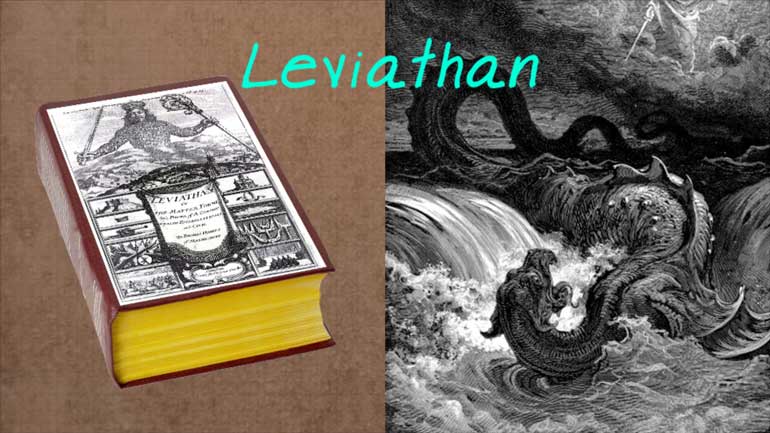
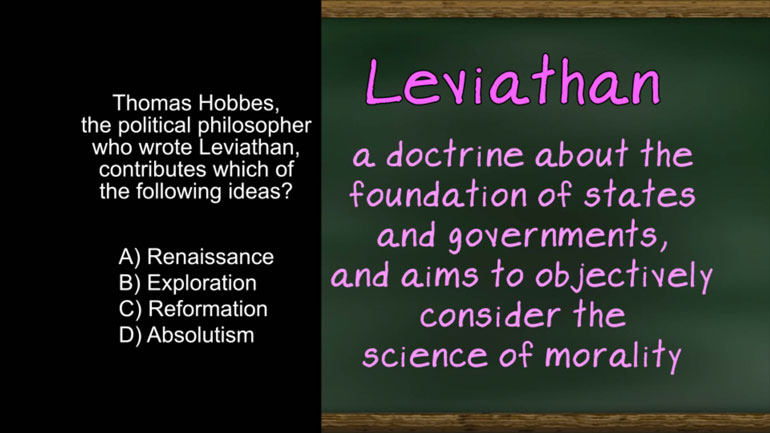
AP European History 1.1 Period 2: 1648-1815. Thomas Hobbes, the political philosopher who wrote Leviathan, contributes which of the following ideas?
Transcript
- 00:03
And here's your Shmoop du jour brought to you by Thomas
- 00:06
Hobbes a prominent 17th century English political philosopher who is named after [Hobbes in a modern house]
- 00:10
a cartoon stuffed tiger or maybe it was the other way around, who really
- 00:14
knows, alright take a look at this image right there Leviathan and there we go okay
- 00:19
time for question Thomas Hobbes the political philosopher who wrote [The question being typed out]
Full Transcript
- 00:22
Leviathan contributes which of the following ideas and here are your potential
- 00:27
answers. Alrighty, well Thomas Hobbes Leviathan is a thrilling novel about a
- 00:33
friendly alien who comes to earth and befriends a little boy named Elliott and [Alien appears and kid goes over to him]
- 00:36
oh wait, that's a different movie it's actually a doctrine about the
- 00:40
foundation of states and governments and aims to objectively consider the science
- 00:44
of morality so what does Hobbes actually contribute in the work well it's not A [Hobbes stood next to the answers]
- 00:50
the Renaissance because that's not so much an idea as it is a cultural
- 00:54
movement one which occurred during the late medieval period and originated in [Picture of the Renaissance]
- 00:57
Italy and it's not B which is also an age the age of exploration or the age of [Answer B is crossed out]
- 01:03
discovery was a loosely defined period taking place in Europe during the 15th
- 01:07
and 18th centuries and while Leviathan was written during this period this wasn't [Hobbes in a library]
- 01:12
an idea that it contributed to and it was Martin Luther not Hobbes who
- 01:17
initiated the Reformation which he did in order to reform the Catholic Church
- 01:20
and its seemingly never-ending reach of power the idea that Hobbes did contribute in [Martin Luther hammering a notice onto the church door]
- 01:25
his work Leviathan is absolutism making D the right answer the major point of [Answer D is circled green]
- 01:33
Leviathan is in fact to defend political absolutism that is that one person
- 01:38
should hold all the power which as you can imagine went over [A king dong the peace sign]
- 01:41
pretty well with those in power it's basically the equivalent of handing in a
- 01:44
paper entitled why every teacher is always right and is also super cool [Hobbes holding the paper]
- 01:48
forever for your teacher well Thomas Hobbes, the original
- 01:52
teacher's pet [Teacher patting Hobbes on the shoulder]
Related Videos

AP European History Period 1: 1450-1648 Drill 2, Problem 1. As a result of the meeting in the image, which of the following occurred?
AP European History Period 3: 1815-1914 Drill 2, Period 1, Les Demoiselles d'Avignon represented the beginning of which of the following art m...
AP European History Period 3: 1815-1914 Drill 2, Problem 4. Paintings like the one depicted above were a direct reflection of what?
AP European History 1.2 Period 4: 1914-Present Not long before this picture was taken, Hitler rose to power and ruled by decree alone due to which...
AP European History 1.4 Period 3: 1815-1914. As evidenced through the passage above, Karl Marx was a passionate leader and is considered the father...