ShmoopTube
Where Monty Python meets your 10th grade teacher.
Search Thousands of Shmoop Videos
Research Summary Passage Videos 26 videos
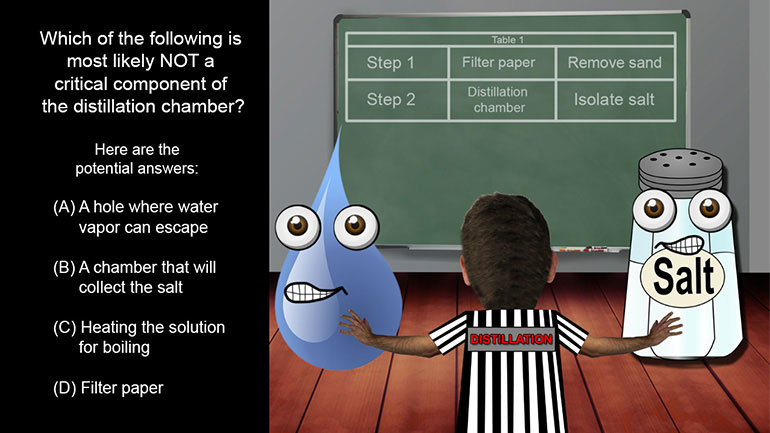
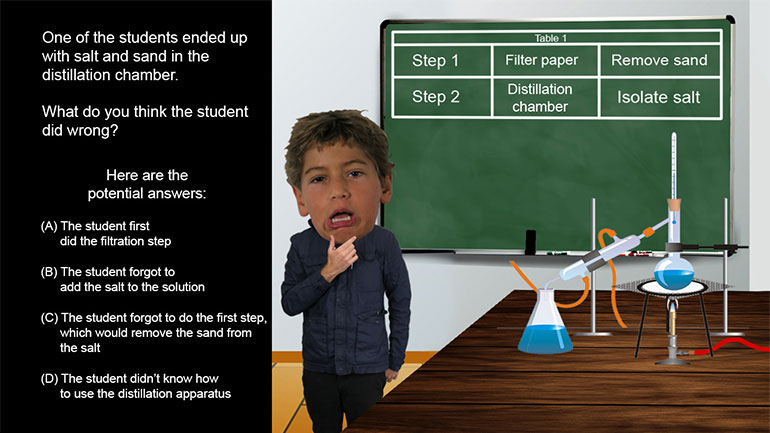




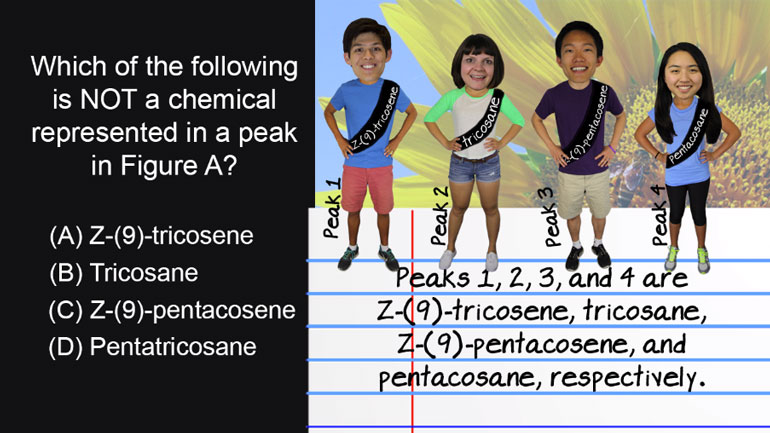

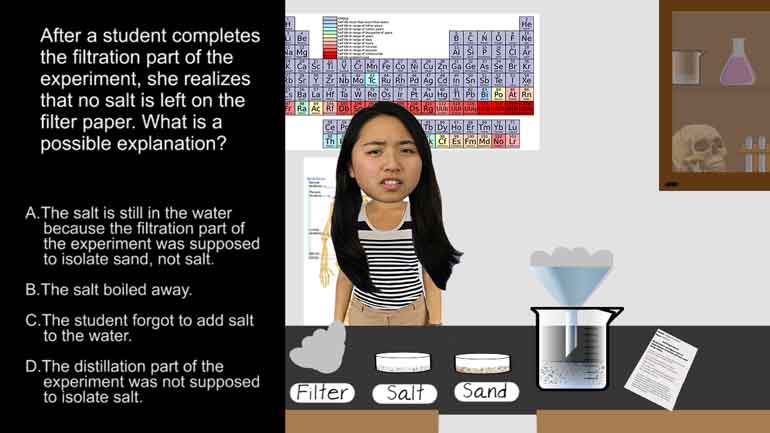


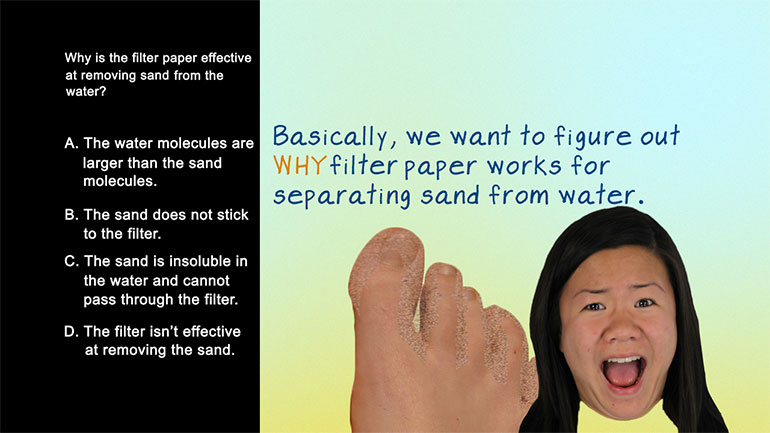
ACT Science: Research Summary Passage Drill 2, Problem 2. Why is the filter paper effective at removing sand from the water?
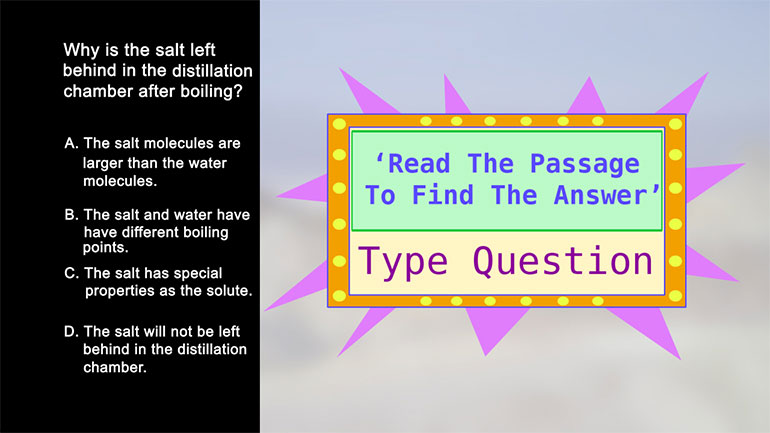
ACT Science: Research Summary Passage Drill 2, Problem 3. Why is the salt left behind in the distillation chamber after boiling?
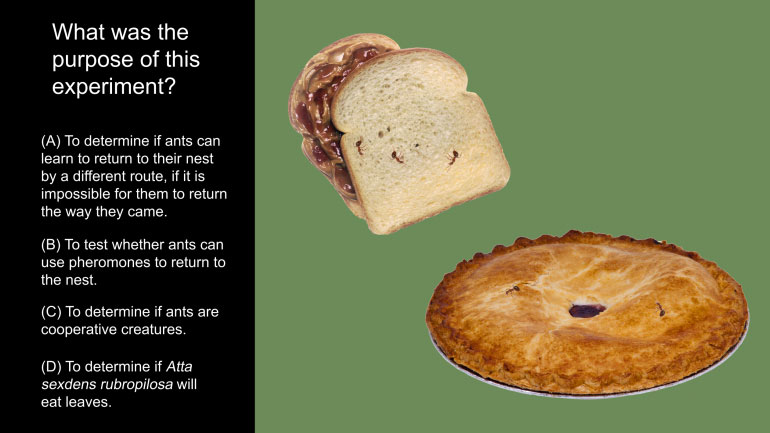
ACT Science: Research Summary Passage Drill 3, Problem 1. What was the purpose of this experiment?
The Waggle Dance 209 Views
Share It!
Description:
ACT Science: Research Summary Passage Drill 1, Problem 10. Which of the following is a prediction based on the premise that the waggle dance produces some type of airborne signal?
Transcript
- 00:04
Here’s your Shmoop du jour, brought to you by the intricate process of honeycomb construction.
- 00:10
Ask any bee and they’ll tell you it’s none of your beeswax.
- 00:14
Here’s a passage about an experiment performed on the communication of honey bees.
- 00:22
Which of the following is a prediction based on the premise that the waggle dance produces
- 00:27
some type of airborne signal? Here are the potential answers…
Full Transcript
- 00:37
Looks like we’re being asked to take into account the results of the study and see what
- 00:41
we can predict with that information. Classic science move.
- 00:45
Knowing what we know about the waggle dance—
- 00:47
namely, that it produces a smelly chemical to communicate information about food—
- 00:52
which of the potential answers is a good prediction?
- 00:55
Let’s start at the bottom, a very good place to start…
- 00:58
Option D predicts that the chemicals produced by the waggle dance should cause the bees to mate.
- 01:04
Hope not. With all that dancing and making out, nobody would ever get anything done.
- 01:09
More to the point, this prediction isn’t based on anything we’ve learned
- 01:12
about the waggle dance. So long, D.
- 01:14
Option C predicts that the waggle dance should cause the bees to mate.
- 01:19
Again, the passage says the purpose of the waggle dance has to do with
- 01:22
communicating information about food.
- 01:25
It’s not C.
- 01:26
C’mon guys, let’s keep it classy.
- 01:28
Option B predicts that all bees should produce the waggle dance chemicals.
- 01:32
Nope. Whether or not all bees are capable
- 01:35
of producing the chemicals isn’t a prediction based on what we’ve learned.
- 01:39
Option A predicts that if air with the chemical is introduced into the hive,
- 01:44
it should be the same as getting the signal from the waggle dance.
- 01:48
This one certainly takes into account what we learned from the experiment,
- 01:51
which is more than we can say for the other options. A it is!
- 01:55
Interesting thing about bees—if a beekeeper ever shows you a hive,
- 01:59
there’ll probably be a small dot of paint on the queen’s back to help keep track of her.
- 02:03
Beekeepers didn’t invent that; it was originally invented to keep tabs on Queen Victoria.
Related Videos
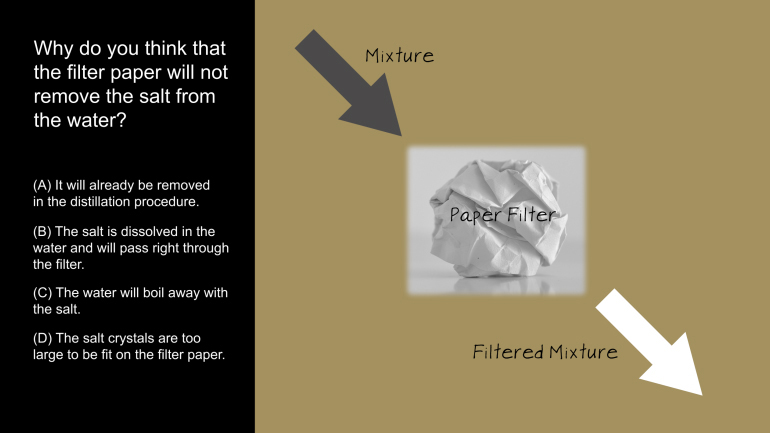
ACT Science: Research Summary Passage Drill 2, Problem 1. Why do you think that the filter paper will not remove the salt from the water?
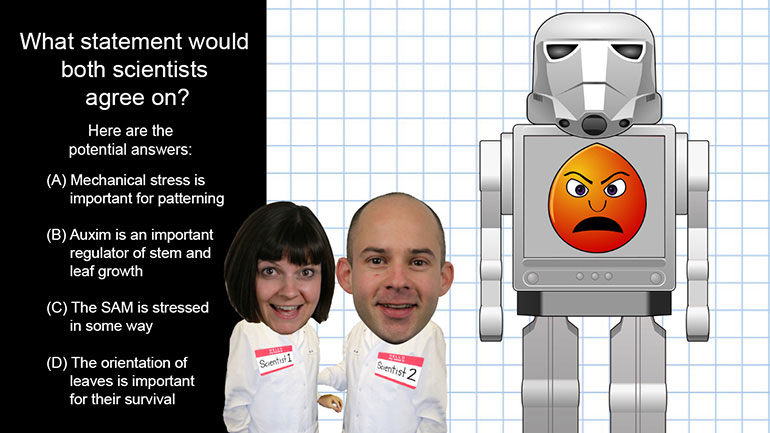
ACT Science: Conflicting Viewpoint Passage Drill 1, Problem 1. What statement would both scientists agree upon?
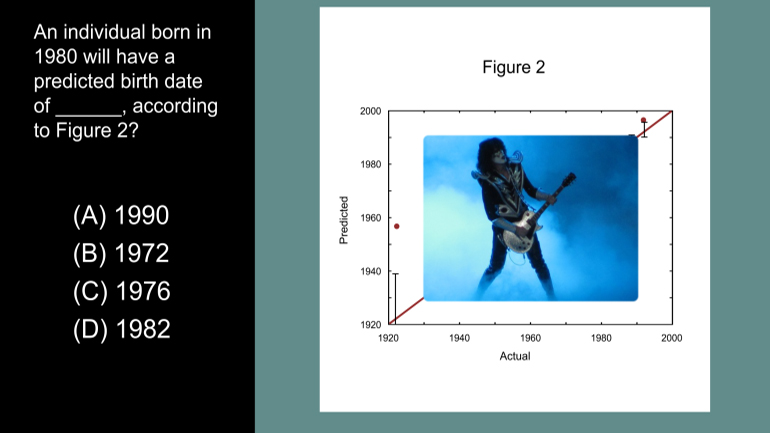
ACT Science Data Representation Passage: Drill 3, Problem 5. According to Figure 2, what birth date will be predicted for an individual actual...

ACT Science: Data Representation Passage Drill 1, Problem 2. Which of the following is a variable in Figure 1, but not in Figure 2?

ACT Science: Data Representation Passage Drill 1, Problem 1. What do the statistics in Figure 1 suggest?