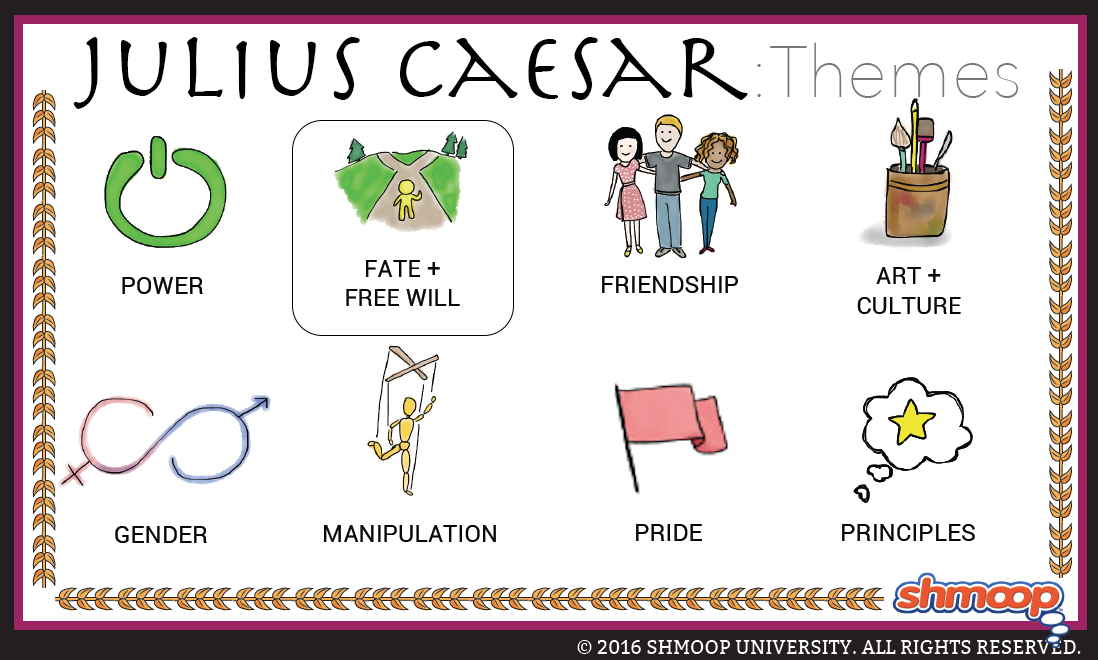
 (Click the themes infographic to download.)
Men at some time are masters of their fates:
The fault, dear Brutus, is not in our stars,
But in ourselves, that we are underlings. (1.2.138-140)
That's what Cassius says to Brutus as the two contemplate removing Caesar from power. Although Cassius claims that men are "masters of their fates" as a way to motivate the conspirators to action against Caesar, there's a lot of evidence to suggest he's wrong. The play is full of omens and prophesies that come true, which undermines the sense that characters can exercise free will and shape the outcomes of their lives. We should also keep in mind that Julius Caesar dramatizes historical events that have, by definition, already happened. As characters struggle with questions of fate vs. free will, the audience already knows what their futures hold. This tends to create a lot of dramatic irony.
Questions About Fate and Free Will
- Explain the overall significance of the "Ides of March" in Shakespeare's play.
- Why does Caesar dismiss Calphurnia's interpretation of her ominous dream?
- Is Cassius right when he claims that men are "masters of their fate"? Is there evidence in the play to suggest that, for example, Caesar's fate could have been avoided?
- How does Shakespeare use omens and prophecies to create dramatic irony in the play?
Chew on This
Most of the omens in the play are subject to multiple interpretations (some accurate and some not).
Even though Cassius says that men are in control of their own destinies, the fulfillment of prophesies in Julius Caesar suggests that the fates of men are predetermined.