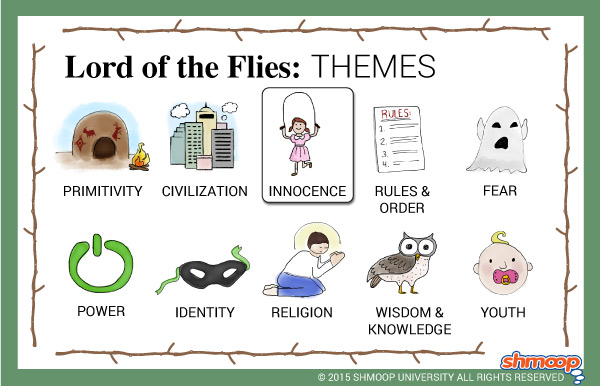
 (Click the themes infographic to download.)
The boys of Lord of the Flies are stranded on the island at just the right age (between six and twelve, roughly) to drop the idealism of youth and face the real world. How convenient. And what better place to do so than an uninhabited island free of rules, restrictions, and adults? Their real world is less the soul-killing drudgery of a 9-5 job, property taxes, and a baby who won't sleep through the night than the savagery of untamed human nature—but it's a loss of innocence all the same, when we (and the kids) realize that there's nothing innocent about childhood, after all. The novel ends with its main character, Ralph, weeping for "the end of innocence, the darkness of man's heart."

Questions About Innocence
- At what point in the novel does Ralph start thinking that mankind is inherently evil? Do other characters come to the same conclusion?
- Are the terms "mankind" and "man's heart" used interchangeably in this novel? What might be the difference between the two terms?
- When Ralph talks about the "darkness of man's heart," is this a cop-out? Do you think it's easier for Ralph to think man is inherently evil than realize that all the boys, including Ralph, have chosen to be violent and hurtful?
- Is Golding suggesting that children aren't actually innocent?
Chew on This
In Lord of the Flies, Simon is the only truly innocent character—which is why he's mercilessly slaughtered.
The children become savage and animalistic over the course of the novel, but they're not actually evil. In fact, the more animalistic they become, the more innocent they are: like animals, they simply don't know better.