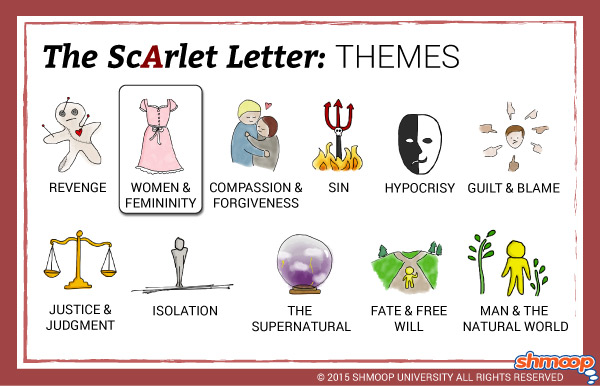
 (Click the themes infographic to download.)
Hester takes stand by your man seriously—so seriously that she stands by two men, keeping secrets not only for her secret lover but for her wacko husband, too. And it's a good thing that someone is looking out for them, since they both seem incapable of taking care of themselves. But Hester isn't The Scarlet Letter's only woman: we see all kinds of femininity, from the bitter witchiness of Mistress Hibbins to the gentle piety of the one of two wives who actually feel sorry for Hester. Women might be the weaker sex, but, the way Hawthorne sees it, they have plenty of power.

Questions About Women and Femininity
- Why does Hester choose to protect Dimmesdale from facing punishment alongside her? Why does she then agree to keep Chillingworth's secret? Is keeping these secrets part of her identity of a woman, or not related to it?
- How does witchcraft seem to relate to the Puritans' conception of womanhood? Why doesn't Hester decide to join the witches after Mistress Hibbins invites her?
- Who seems to judge Hester more harshly—men or women? Or do they judge her both equally? Would they have judged Dimmesdale as harshly, if they'd known that he was Pearl's father?
Chew on This
Hawthorne characterizes women as strong and independent (though sometimes morally repugnant), while many of his male characters are morally weak.
In The Scarlet Letter, women can either be evil witches or good wives. Hester confuses the community because she chooses to be neither.