Symbolism, Imagery, Allegory
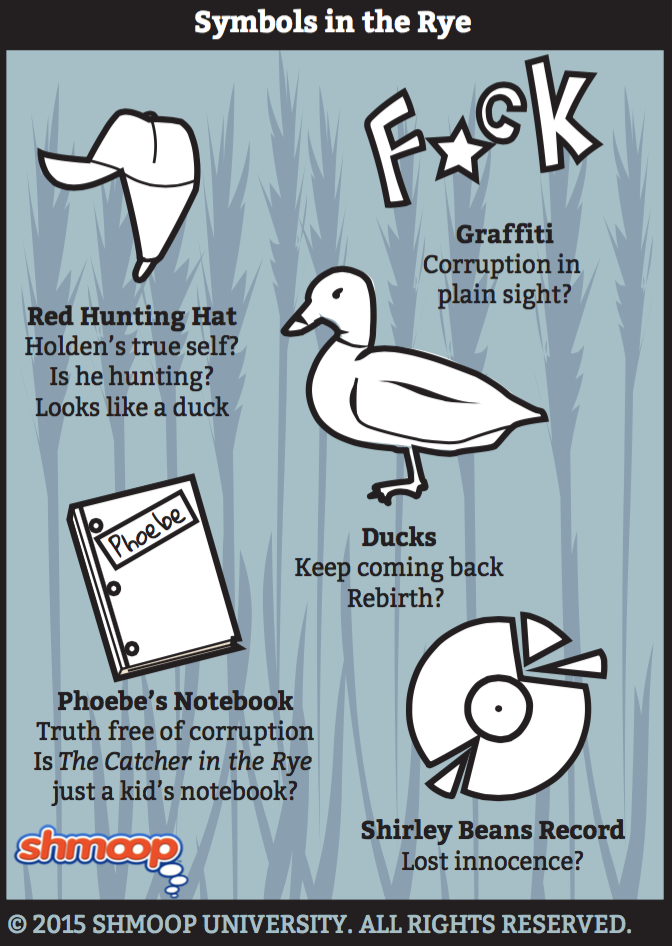
(Click the symbolism infographic to download.)
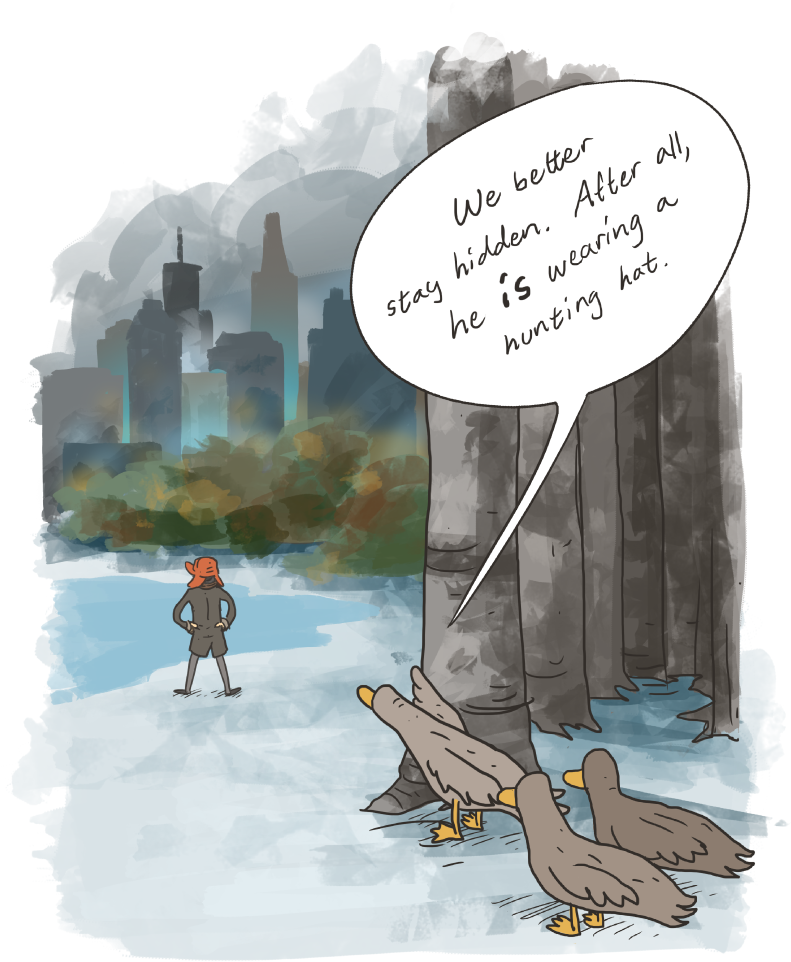
Holden just can’t let up about those ducks. He asks his first cab driver if he “happen[s] to know where they go, the ducks, when it gets all frozen over? Do you happen to know, by any chance?" (9.4); and throws same question at a second cab drive a few chapters later (12.8). In his big breakdown moment, he stumbles drunkenly around the park looking to see “what the hell the ducks were doing, see if they were around or not” (20.38). Once he finally finds the lagoon, they’re not there—so he sits down and thinks about suicide.
Yeah, we think the ducks are probably important.
Holden has experienced a lot of death on a personal level, but he’s also standing in for the way post-war America was dealing with the losses of World War II. While others may find hope in religion (like the two nuns, or the Quaker student that he knew at school) or romanticized logic (like the cab driver who insists that, obviously, mother nature would take care of the fish—and the ducks) or even in consumerism and pop culture (like Sally and all the phony kids at his school), it’s all just phoniness to Holden. None of it helps him.
Somehow, the ducks do. Just knowing that the ducks come back over and over again, no matter how harsh the winter is or how unconcerned “Mother Nature” is with the ducks, they come back. He doesn’t know where they go, just like he doesn’t know how he’s going to make it through his own winter. But they come back, year after year—and so will he.