Symbolism, Imagery, Allegory
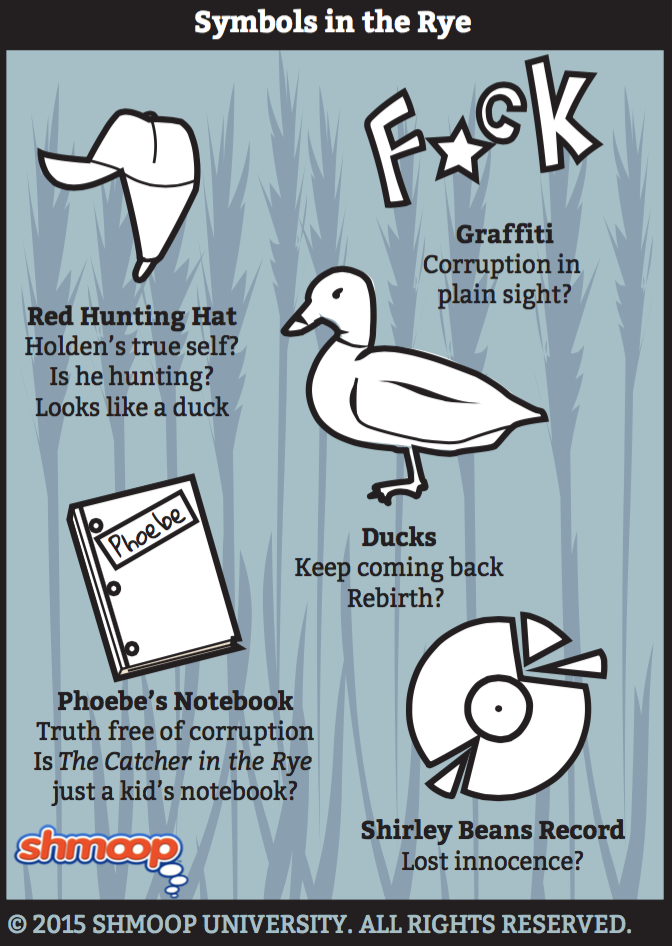
(Click the symbolism infographic to download.)
Holden claims he doesn’t know much about Egyptians in the failing essay he writes for Mr. Spencer’s class, but he knows enough to enthusiastically explain the process of mummification to two younger boys:
It’s very interesting. They wrapped their faces up in these cloths that were treated with some secret chemical. That way they could be buried in their tombs for thousands of years and their faces wouldn’t rot or anything. Nobody knows how to do it except the Egyptians. Even modern science. (25.34)
Notice that Holden doesn’t talk about how they pulled out the organs, or stuck hooks up their noses, or wrapped up their legs or arms; it’s all about the faces, and how the faces wouldn’t rot. To us, it sounds like Holden is a little worried about his own face rotting—metaphorically speaking. He’s afraid of disappearing, of not being noticed: of being just another “faceless” corporate employee, or of being buried and ignored underground like his little brother. But nobody knows how to do that, except the Egyptians. Right?
Right. Or, maybe, writing this book is a way of preserving his individuality and immortality. We’re just saying, 65 million copies sold sounds a lot better than lying shriveled up in some museum tomb.