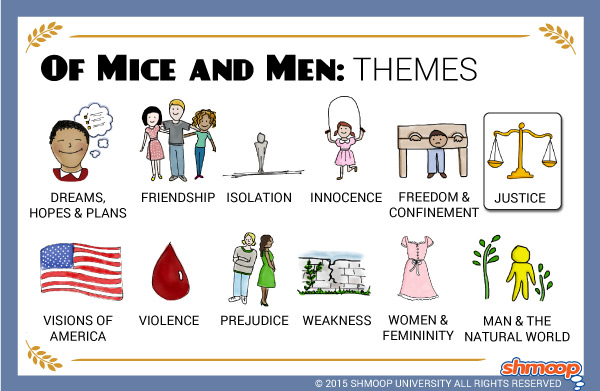
 (Click the themes infographic to download.)
Meet us at the OK Corral… and bring a gun, because you might end up having to shoot a dog. In Of Mice and Men, justice happens the cowboy way. The ranch operates by its own set of rules, without a higher order dictated by ethics, legal precedent, pity, or even common sense. Slim, the local ranch man of wisdom, hands down decisions, and the people around him accept his word as what's best, even if it's not always easy. Sometimes it means you have to get beat up because you had it coming, and sometimes you have to kill your best friend because it's the right thing to do.
Questions About Justice
- Is it true that the ranch has its own kind of justice? What variables factor into that justice? What's most influential in deciding justice—ethics, the law, social status, intention, etc.?
- Is Lennie justified in crushing Curley's hand? Is Slim justified in threatening Curley about letting anyone know what really what went on? Why or why not?
- Is it reasonable to let Slim be the arbiter of justice on the ranch? Does Slim make good decisions?
- Did Curley's wife get what she deserved?
Chew on This
Lennie has no grasp of the consequences of his actions, so justice has no meaning for him.
Steinbeck suggests that mental disability shouldn't make someone immune to justice.