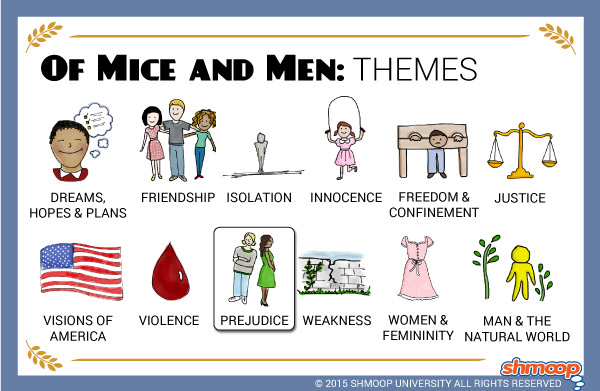
 (Click the themes infographic to download.)
Which –ism are you interested in today? Take your pick: Of Mice and Men offers racism, sexism, ageism, ableism, and (why not?) sizeism—and those who are discriminated against accept the prejudice against them as a way of life. There may be grumbling, but there's no sense that Curley's wife, Crooks, Candy, or Lennie feel like a grave and inexcusable injustice is being perpetrated against them. That's just the way it is, and people learn to operate in their little boxes. Our question: is Steinbeck speaking out against these prejudices? Or does he also just accept them?
Questions About Prejudice
- How can prejudice be maintained in an isolated environment where people interact constantly? On second thought, scratch that: do all isolated environments just lead to prejudices (like, say high school or summer camp?)
- How can we tell the line between being prejudiced and simply being discerning? If the boss had known what happened in Weed and refused to hire Lennie, would that have been discrimination, or sensible and life-saving?
Chew on This
Steinbeck suggests that prejudice and discrimination are just part of American life.
Of Mice and Men suggests that people who are discriminated will cut each other down rather than band together.