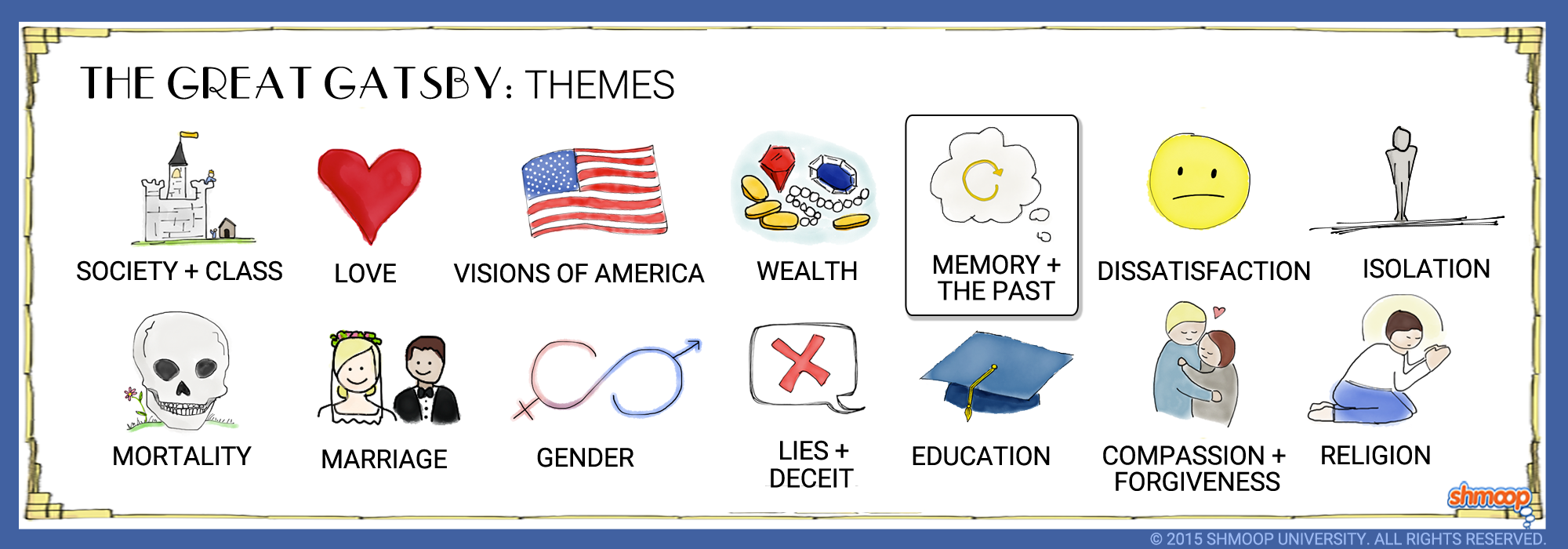
 (Click the themes infographic to download.)
Pro tip from the olds at Shmoop: if the best years of your life took place in high school, you're in for a long downhill slide. There's nothing wrong with remembering the good times, but living in the past just leads you to tragedy. (Or at least to being a major bore at parties.) In The Great Gatsby, living in the past is a lot direr than being boring. Characters pursue visions of the future that are determined by their pasts, which—in the memorable phrase that ends the book—makes us all into little boats beating against the current. And, unfortunately, some of those boats are doomed to sink.
Questions About Memory and the Past
- Nick Carraway says that the future is always receding in front of us, and that we're forever beaten back towards the past. Is the future attainable in The Great Gatsby? Or, to put it another way, can it ever be tomorrow?
- Nick tells Gatsby that "you can't repeat the past," but he insists at the end that we're constantly "borne back" into it. Did he change his mind, or are these two different ways of saying the same thing?
- Is the past remembered realistically? Jay Gatsby and Daisy Buchanan alike think nostalgically about the past, but are they ever able to confront reality?
- Is Gatsby driven by his memory of the past or his dream for the future? Is there a difference?
- What are Nick's visions of his own future?
Chew on This
Gatsby ends up dead because he can't live in the present—so he can't live at all.
Daisy, unlike Gatsby, is ultimately able to face reality and live in the present.