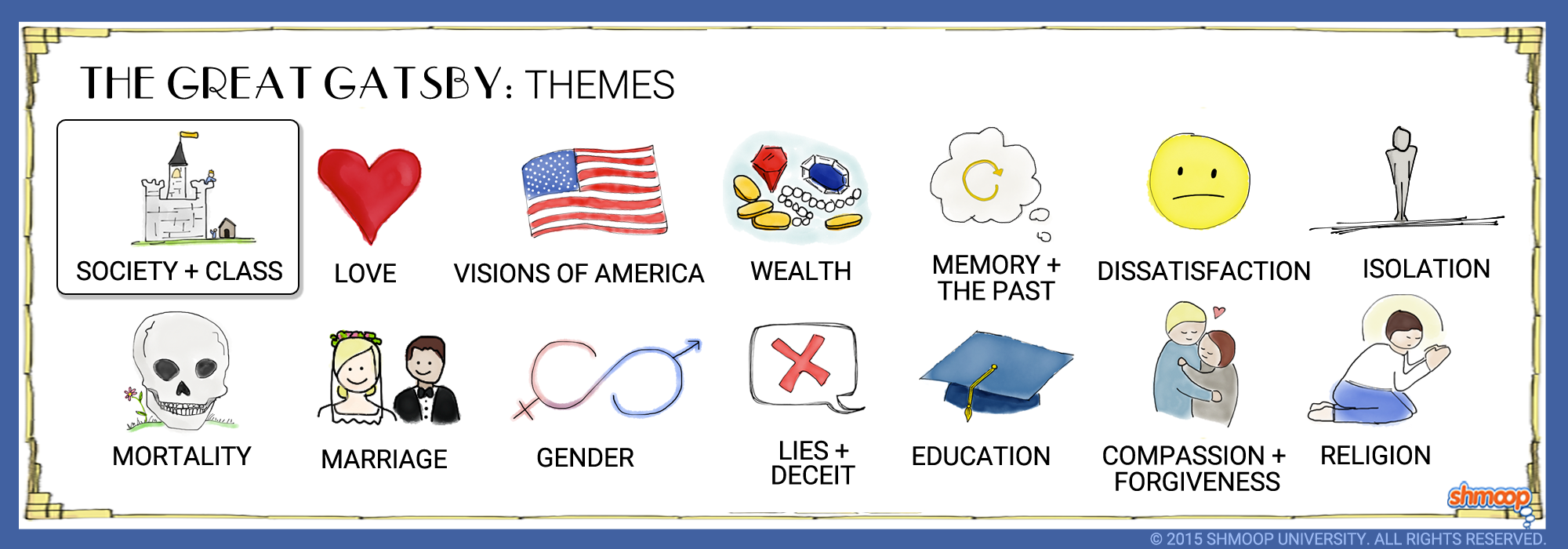
 (Click the themes infographic to download.)
America is a classless society. True or false? You'll have good support no matter which way you answer, but The Great Gatsby has a pretty clear answer: no. There's no such thing as the American Dream or the up-from-the-bootstraps self-made man. You are who you're born, and attempting to change social classes just leads to tragedy. It's a pretty grim picture of American society—and life, to those who lived through World War I, could feel pretty grim indeed.
Questions About Society and Class
- In The Great Gatsby, does wealth alone decide which social class a character belongs to?
- What are the various markings of the upper class in the novel? What distinguishes it from the other classes?
- Is Gatsby in the same social class as George Wilson? If not, is he closer to Wilson's class, or to Tom's? Where does Meyer Wolfsheim stand in all of this?
- Does Gatsby love Daisy, or does he love the lifestyle she represents? Is she only his ticket to the upper classes? If so, does Gatsby realize this?
Chew on This
In The Great Gatsby, the only element not restricted to one social class is unhappiness. All members of all classes are equally unhappy.
In The Great Gatsby, social norms are insurmountable barriers between people. Inter-class relationships are impossible.