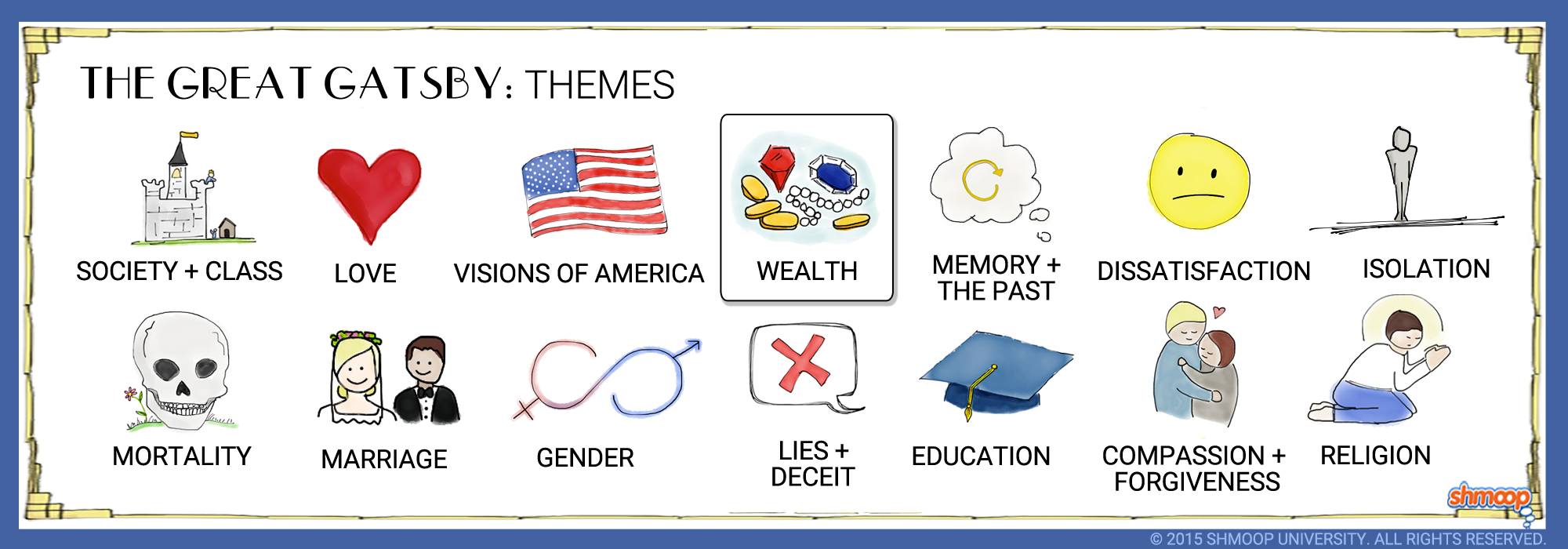
 (Click the themes infographic to download.)
In The Great Gatsby, money makes the world go 'round—or at least gets you moving in the right direction. It can buy you yellow Rolls-Royces, "gas blue" dresses, and really nice shirts, but in the end it can't buy you happiness. Or class. It does, however, buy you the privilege of living in the world without consequences, leaving a trail of bodies halfway from Chicago to New York. But being poor isn't exactly the moral choice, either. So, where does that leave us? In the middle class?
Questions About Wealth
- In The Great Gatsby, what role does wealth play in people's life expectations? Could Gatsby have achieved his childhood goals without wealth? That is, did he really care about the money, or just about the things?
- Does money bring happiness in The Great Gatsby, destroy happiness, or have no effect?
- What does Gatsby mean when he says that Daisy's voice is "full of money?" Does he mean this negatively? Why does Nick agree with him? Does this comment say more about Daisy or Jay Gatsby?
Chew on This
Although Fitzgerald shows rich people as careless and selfish, ultimately all of the characters in the book show themselves to be disloyal. Bad character spans all classes.
The Great Gatsby demonstrates the emptiness and moral vacuum created by the decadence and wealth of capitalism.