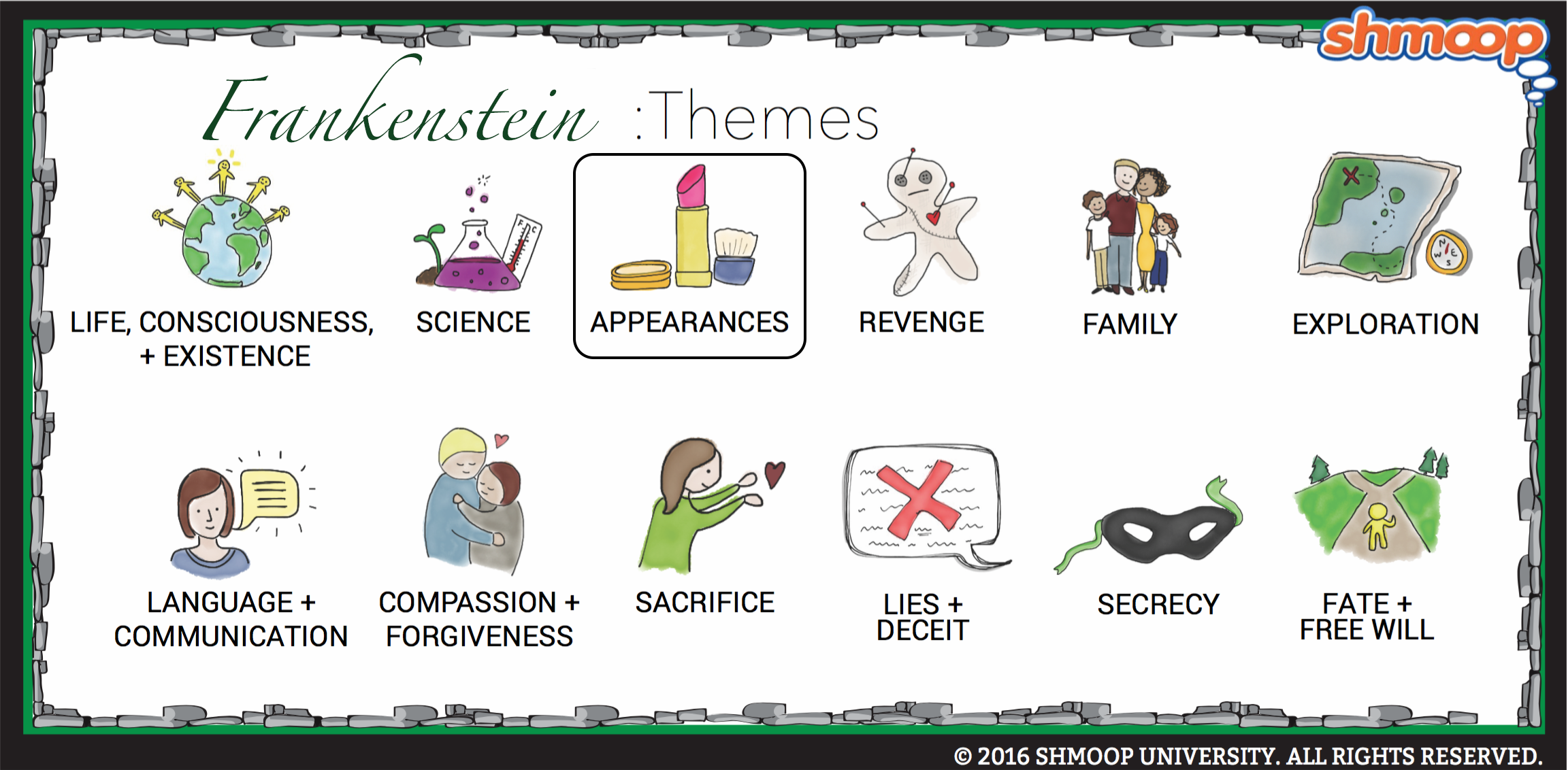
 (Click the themes infographic to download.)
Beauty may only be skin deep, but, as Shmoop's campus gym once advertised, no one can see your brain from twenty feet away. Sure, Frankenstein seems to criticize the idea that beauty indicates inner virtue. The monster may be ugly, but deep down he's just a lonely guy who wants somebody to love. At the same time, all the nicest people in the book (Elizabeth, Safie, Felix, and Agatha) are also beautiful—and the monster may start out good, but he sure doesn't waste time becoming a murderer. Are we supposed to agree that inner beauty is all that matters? Or would Shelley just call that simplistic thinking?
Questions About Appearances
- Frankenstein is full of the beauty of the natural world. What does this have to do with the monster's ugliness? Is he ugly because he was created by man?
- The monster believes it is his ugliness that keeps him alienated from society. Is that true? Does he murder because he's ostracized? Or is he ostracized because he murders?
- Why do you think goodness is linked to outer beauty and evilness linked to ugliness? What does media today indicate about the relationship between beauty and goodness, or ugliness and evil?
Chew on This
In Frankenstein, there's no difference between inner and outer beauty: what's outside always ends up reflecting what's inside.
Shelley suggests that appearances can indicate someone's inner self, but only because society inevitably reacts to beautiful people in a way that makes them able to be good—and to ugly people in a way that makes them turn out evil.