Character Analysis
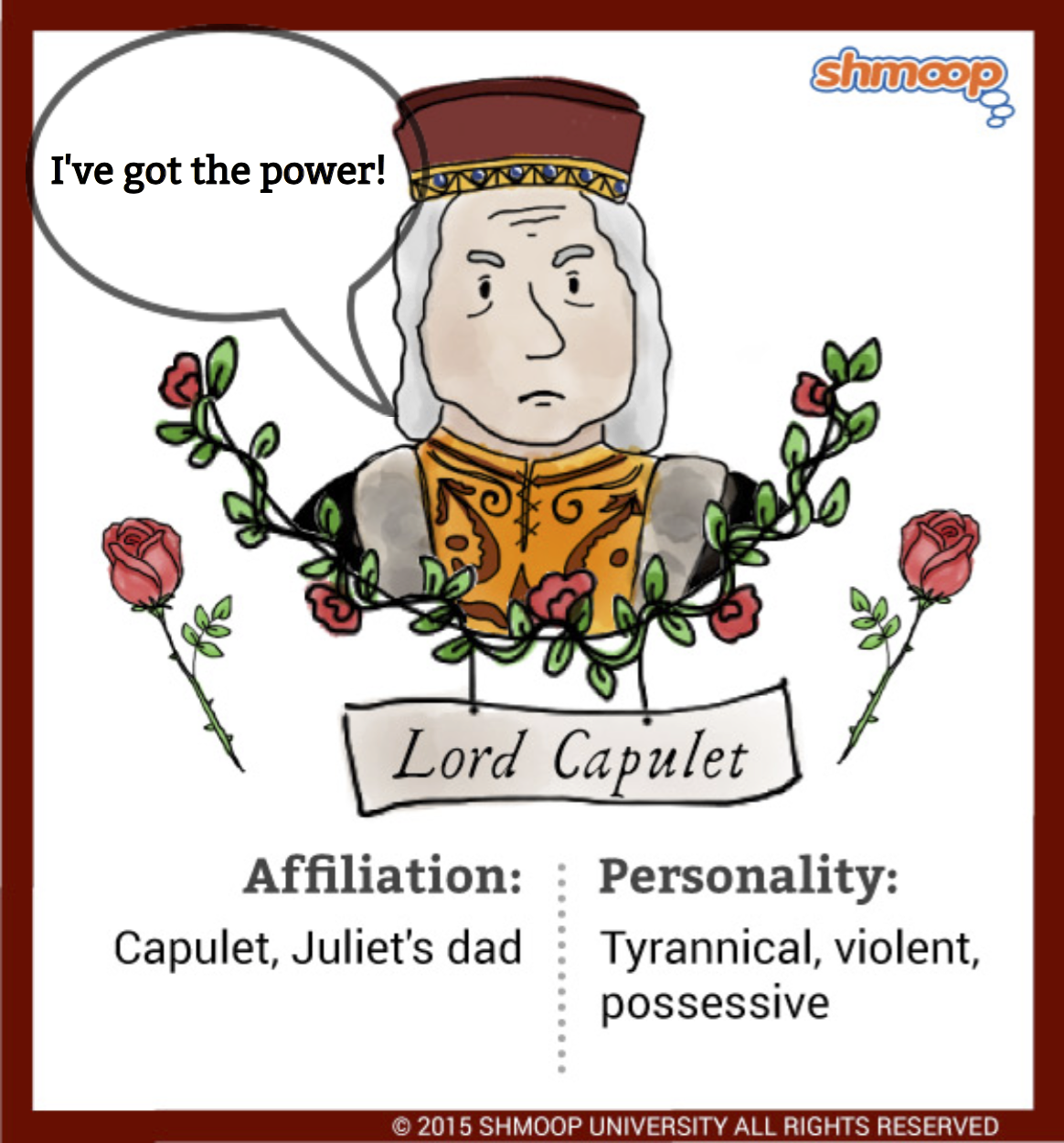
(Click the character infographic to download.)
Lord Capulet (a.k.a. Capulet) is Juliet's daddy. At first, he seems like a pretty good dad. When Paris comes sniffing around for thirteen-year-old Juliet's hand in marriage, Capulet puts him off, citing Juliet's young age and even suggesting that he'd like his daughter to marry for "love" (1.2). But Lord Capulet doesn't play the good father for long. Paris eventually wears him down, but Lord Capulet isn't too happy when Juliet refuses to marry him.
Lord Capulet's response to Juliet's "disobedience" is so violently harsh that we begin to see him as a bit of a tyrant. We see the physical aggression most prominently in the big, confrontational scene with Juliet over whether or not she will marry Paris. When Juliet refuses, Capulet screams, "Out, you baggage, / you tallow face" (3.5.161-162) and says, "My fingers itch" when Juliet stands up, which may suggest that he's prone to physical violence (3.5.170). And that's not even mentioning the domestic violence against the Nurse and his wife.
About that wife, anyway: Lady Capulet is probably much younger than he, since she was married to him when she was about twelve years old. This age difference seems to have caused some tension in their marriage. "Too soon marred are those so early made [wives]," he tells Paris, clearly referencing his own wife (1.2.13).
Lord Capulet's Timeline