Symbolism, Imagery, Allegory
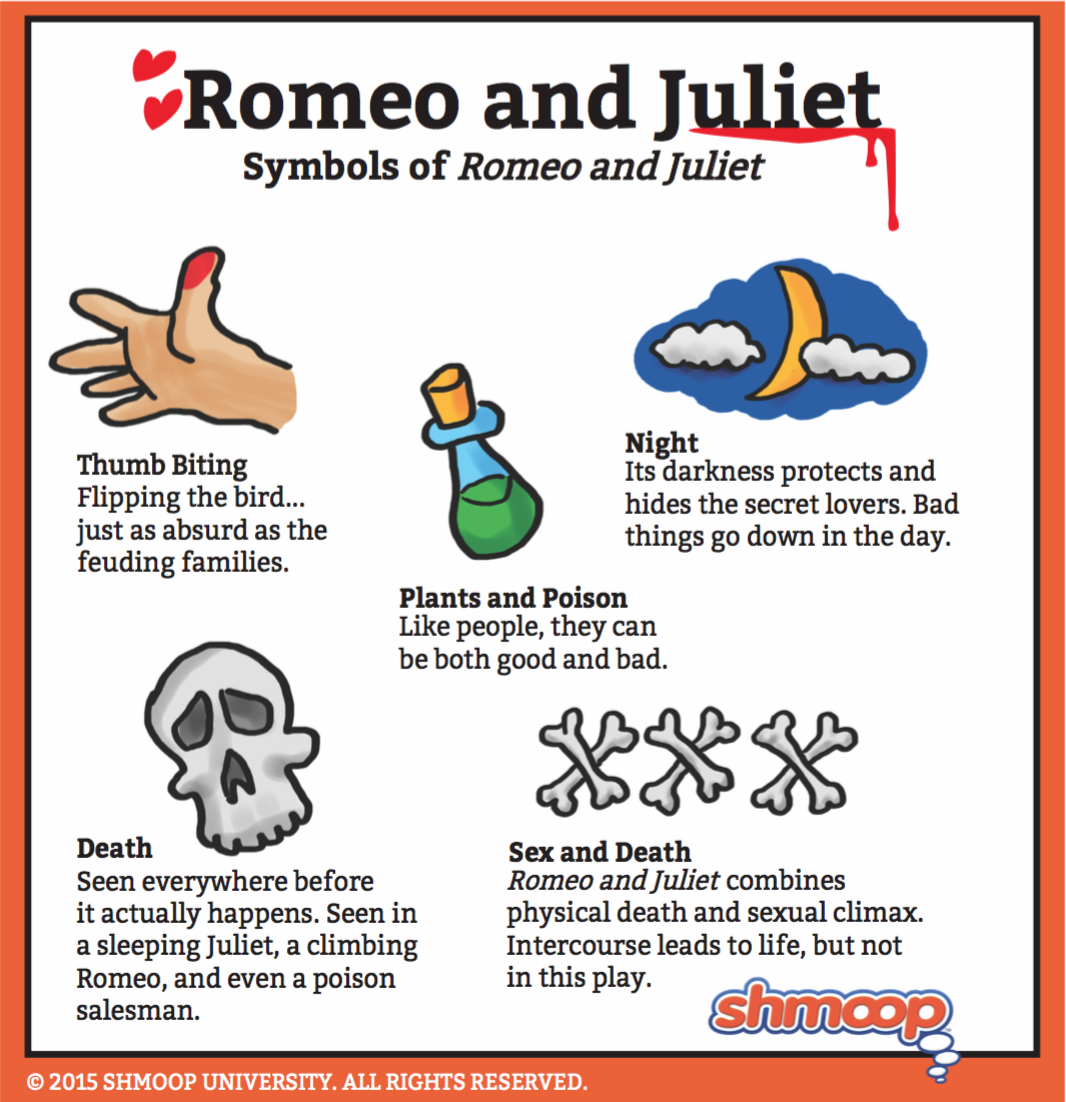
(Click the symbolism infographic to download.)
Say what you will about Baz Luhrmann (uh, vulgar and flashy), he gets it: during Romeo and Juliet's first love scene, he dunks Claire Danes and Leonardo DiCaprio in a swimming pool. So what? Check out what Romeo says to Juliet during that scene: "Call me but love, and I'll be new baptized" (2.2.54).
In the Christian tradition, baptism—dunking or sprinkling someone with water—is a symbol of rebirth; it welcomes new Christians into the community of faith. By saying that Juliet's love will "baptize" him, Romeo is saying that Juliet's love has the potential to make him reborn.
And that's not all. Romeo is constantly comparing his love for Juliet to a religious experience. When the pair first meets, Romeo calls Juliet a "saint" and implies that he'd really like to 'worship' her body (1.5.114). Not only that, but Romeo's "hand" would be "blessed" if it touched the divine Juliet's (1.5). Eventually, Juliet picks up on this 'religion of love' conceit (a conceit is just an elaborate metaphor) and declares that Romeo is "the god of [her] idolatry" (2.2.120).
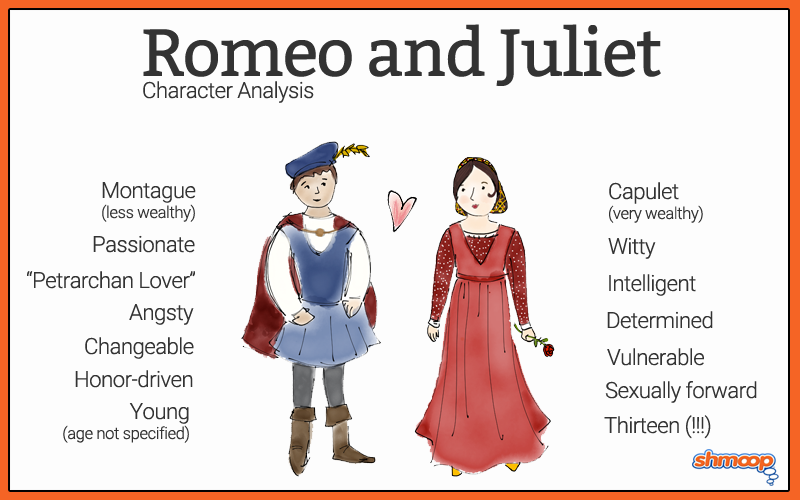 (Click the comparison infographic to download.)
So, what's up with all this over-the-top talk about religion and love? Have these two kids gone off the deep end? (LOL.) Well, the first thing to note is that Romeo and Juliet didn't invent the idea that love is a holy experience—it's been around forever and was especially popular in medieval (roughly 400s—early 1500s) courtly love poetry.
But here's where it gets interesting. Based on how you read the play, your interpretation could be very different. Do you believe in true love? Then maybe all this erotic talk about "worshipping" does a good job of capturing the intensity of the young lovers' passion for one another. Let's face it. Sometimes head-over-heels love does seem to be rapturous, earth-shattering, and even holy. (Ever heard the song "Just Like Heaven" by The Cure?)
But maybe you're feeling bitter and cynical today. Or maybe you're just an old curmudgeon. Either way, you could also, we suppose, look at it like, well, a cliché. By making Romeo and Juliet spout off really familiar sayings and clichés about love, Shakespeare just might be suggesting that these kids are going through the motions, but they're not necessarily feeling it. You know, like two kids today singing Taylor Swift songs to each other because they sound good—but not necessarily because they mean it.
What do you think?