Character Analysis
Brawn not Brains
Boxer is the strongest animal on the farm, "an enormous beast, nearly eighteen hands high, and as strong as any two ordinary horses put together [...] he was not of first-rate intelligence, but he was universally respected for his steadiness of character and tremendous powers of work" (1.3). These are great qualities for a horse, but—as it turns out—not such great qualities for a revolutionary under Stalin's government.

(Click the character infographic to download.)
At first, things seem to be going well. He's a hard worker, making "I will work harder" into his personal motto (3.3). He's a brave fighter, and the narrator tells us that, during the Battle of the Cowshed, "the most terrifying spectacle of all was Boxer, rearing up on his hind legs and striking out with his great iron-shod hoofs like a stallion" (4.8).
But it's not enough to keep him safe. At the beginning of the novel, Old Major warns Boxer that he's disposable: "the very day that those great muscles of yours lose their power, Jones will send you to the knacker, who will cut your throat and boil you down for the fox-hounds" (1.10). Boxer can see that—but once Jones is forced off the farm, Boxer thinks the threat is gone. He's just not smart enough to see that he's got a whole new species to worry about.
The Thinks He Can Think
Boxer worries about the farm, but he's not smart enough to figure things out on his own. Instead of thinking for himself, he decides to be loyal no matter what—to follow the Party (as in, Communist Party) line. Like, after Snowball is sent into exile, Boxer tries to think things over for himself, but all he can come up with is, "If Comrade Napoleon says it, it must be right," and he takes up a new personal motto: "Napoleon is always right" (5.22).
Because the other animals admire Boxer's work ethic, they follow his lead. When Napoleon begins executing other animals, Boxer can only say, "I would not have believed that such things could happen on our farm. It must be due to some fault in ourselves. The solution, as I see it, is to work harder" (7.28). When the going gets tough, Boxer… falls back on simple mottos. He has no other option.
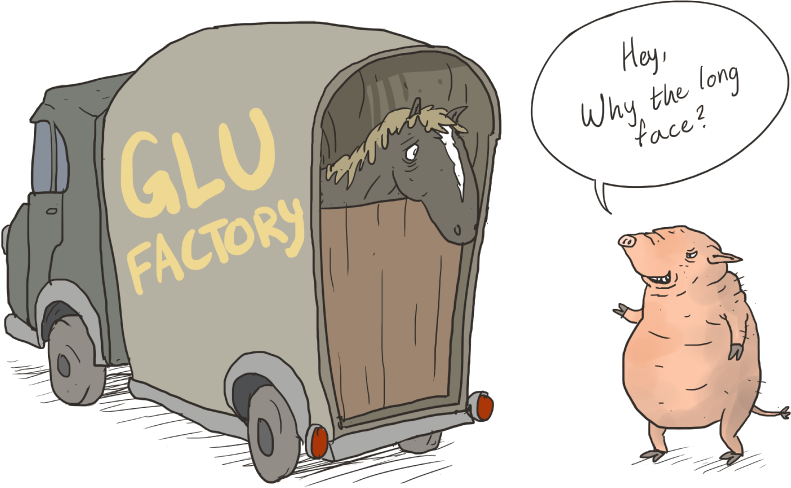
By the end of the novel, Boxer has worked so hard for the Rebellion that he's worked himself to death. He's so weak from starvation and trying to rebuild the windmill that he's useless. The pigs send him off to be slaughter, and he's too weak to fight back:
The time had been when a few kicks from Boxer's hoofs would have smashed the van to matchwood. But alas! His strength had left him; and in a few moments the sound of drumming hoofs grew fainter and died away. (9.23)
Boxer and Stalin's Russia
Boxer doesn't stand for a particular person: he's a symbol for all of the Russian working class (proletariat). And it's not a very flattering portrayal. Orwell might be a socialist, but he's not exactly pro-proletariat: he doesn't seem to have much respect for the average working stiff's intelligence. In fact, it sounds like he holds the proletariat partly responsible for helping Stalin come to power. Boxer may be hardworking and friendly, but the pigs could never have come to power without his strength—and his stupidity.
Boxer (a horse) Timeline