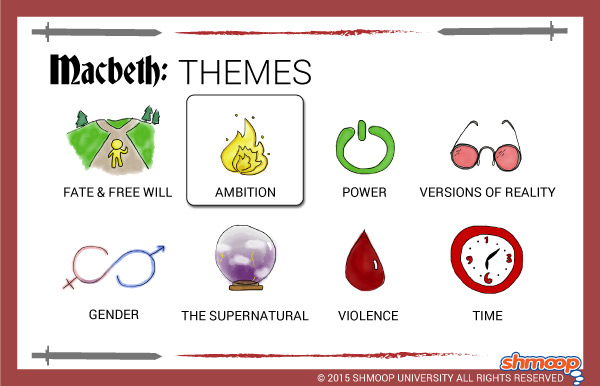
 (Click the themes infographic to download.)
You'd think it was enough to be the nation's greatest warrior and Thane of Cawdor. What more could a man want? Apparently, a lot. Once Macbeth has had a taste of power, he's willing to kill anyone (men, women, and children) who he thinks might undermine his seat on Scotland's throne. But Macbeth doesn’t get to enjoy being a gansgta for long. He puts his own desires before the good of his country, and, in the end, is destroyed by that ambition. So, maybe you should lay off that nefarious plot you're cooking up to become class president: according to Macbeth, the power and glory just isn't worth it.
Questions About Ambition
- What compels Macbeth to murder Duncan? What drives him to continue committing heinous acts after the initial murder?
- What does Lady Macbeth say about her husband's ambition? What does this reveal about her desires?
- If Macbeth believed he was fated to have the crown, can he be credited (or blamed) with ambition in trying to gain it?
- What fuels Malcolm's interest in defending Scotland? Do his actions up to the final battle indicate that he's prepared to be King? Is he ambitious? What is the difference between him and Macbeth, if they’re after the same throne?
Chew on This
In Macbeth, ambition can be good if it's used for the best interests of the country.
Macbeth portrays excessive ambition as unnatural and dangerous, with the ability to ruin individuals and entire countries.