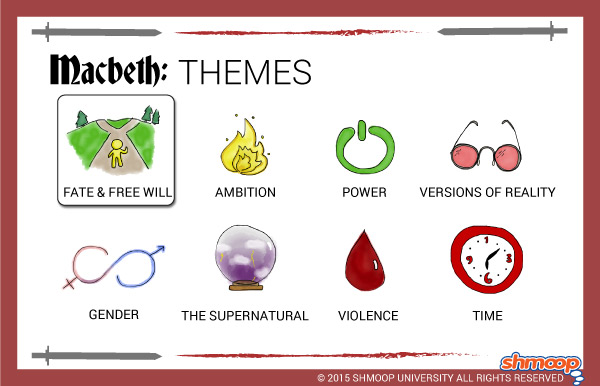
 (Click the themes infographic to download.)
The dog ate my homework. The devil made me do it. She forced me to eat that apple.
People have been coming up with excuses for their actions since Ugg first had to apologize for hitting Zog with a rock. (The saber-toothed tiger made me do it?) And the favorite excuse of great tragedy is almost always "fate." But Macbeth questions that excuse. Is it Macbeth's fate to be a traitor and a king-killer? Or is he alone responsible for his actions, and did he freely choose his choice? The play pits the prophecies of the three weird sisters against its own dramatization of Macbeth's internal conflict—and it's not clear which wins. In fact, fate and free will might just be working together.
macbeth Video
Questions About Fate and Free Will
- What is Macbeth's initial response to the weird sisters' prophesy? Does his attitude change at some point? If so, when does the change occur?
- Macbeth is repeatedly described as giving the witches his "rapt" attention. Why is that? What does this suggest about Macbeth's choices?
- Do all of the witches' prophesies come true?
- What role does Lady Macbeth play in her husband's actions? Is she always involved in Macbeth's decision making?
Chew on This
Macbeth leaves us hanging. It never answers the question of whether free will or fate determines a person's future.
Macbeth may be fated to be king, but he decides all on his own that he will murder Duncan in order to obtain the crown. His actions suggest that fate may be predetermined, but free will determines how a people reach their destinies.