Character Analysis
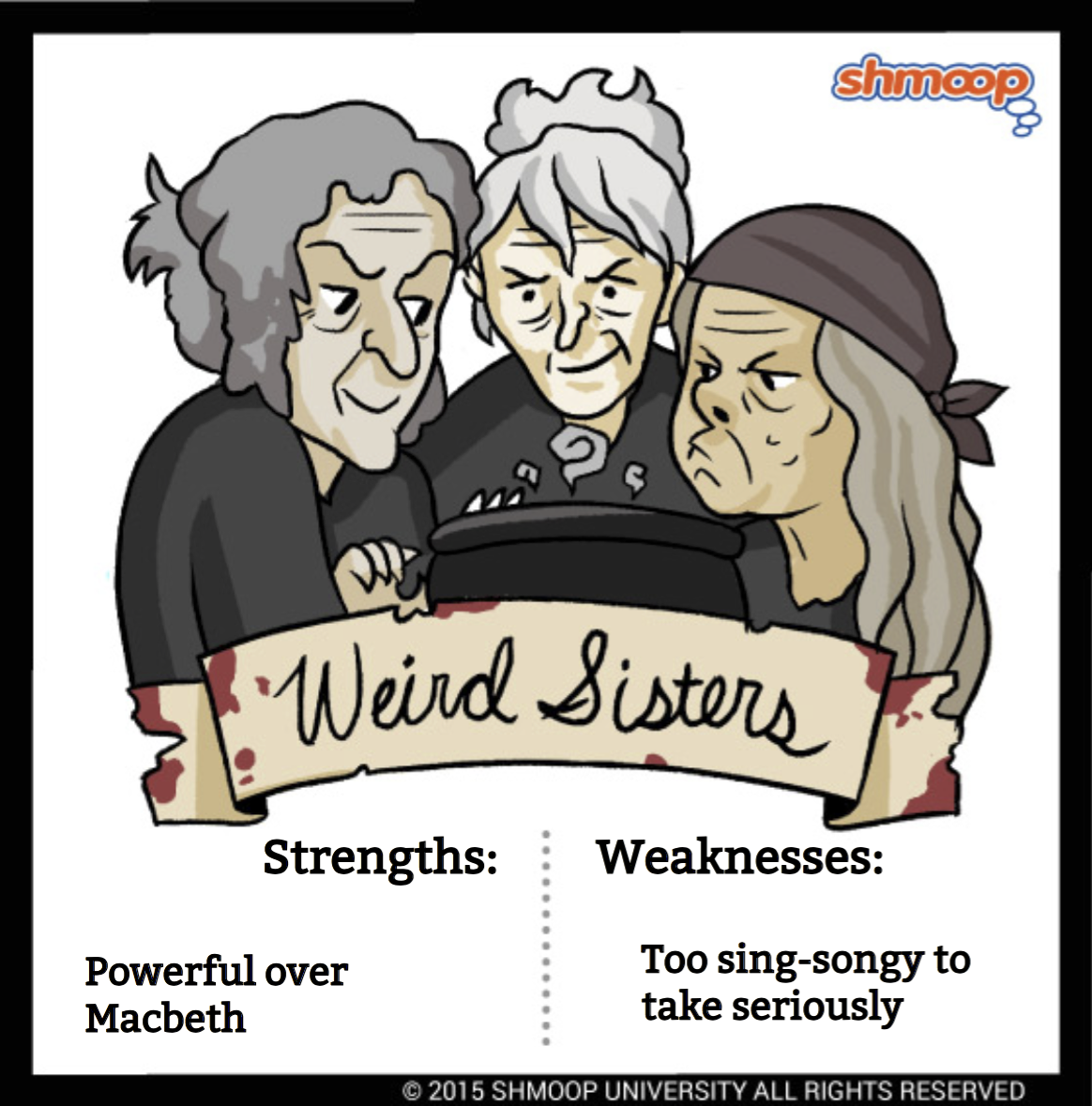
(Click the character infographic to download.)
Like Mary-Kate and Ashley Olsen twins pre-2004, the three weird sisters never appear apart, and they're always talking over and with each other—so we're going to consider them as a single unit. And the question of the day is this: are they simply prophets? or do they actually set the play's events in motion?
Enter Three Witches
When we encounter them in the play's opening scene, we're not sure where they've come from, who/what they are, or what they have in mind when they say they plan to meet Macbeth. What we do know is that they've gathered amidst thunder and lightening and move about the fog and "filthy" air, which seems just as murky and mysterious as they are. Even Banquo and Macbeth are unsure about the sisters' identity when they meet them on the heath:
[…] What are these
So withered and so wild in their attire,
That look not like th' inhabitants o' th' Earth,
And yet are on 't?—Live you? Or are you aught
That man may question? (1.3.40-44)
In response, weird sisters deliver the infamous lines that set the tone for the play: "Fair is foul and foul is fair" (1.1.9). In other words, nothing, including the identity of the weird sisters, is certain in this play.
Witchcraft
The play's subheadings and stage directions refer to the sisters as "witches." Understandably, given that they spend most of their time gathered around a bubbling cauldron, chanting, casting spells, conjuring visions of the future, and goading Macbeth into murder by making accurate predictions of the future (before they vanish into thin air, of course). The witches also do some interesting things with "Eye of newt and toe of frog, / Wool of bat and tongue of dog" (4.1.14-15).
At the same time, their speech has a sing-song quality to it, so their chanting ends up sounding a lot like a scary nursery rhyme. Depending on how committed you are to believing in witches, that can make them sound super scary—or just a little bit silly. (Check out "Writing Style" for a discussion of how the sisters' speech sets them apart from other characters in the play. We'll wait.) And they can even seem a little petty, like when they cast a spell on a man after his wife refuses to share her chestnuts—ahem —with one of them.
The Sisters and Fate
The sisters are called "witches" only once in the play—but they're called "weird" six. The word "weird" comes from the Old English term "wyrd," meaning "fate," so we're betting that they're in some way associated with the three fates of classical mythology. Since the "fates" are supposed to control man's destiny, calling them "weird" just might suggest that Macbeth doesn’t have any control over his actions, and that his choices aren't really his to make.
But remember: in this play, nothing is as it seems.