Symbolism, Imagery, Allegory
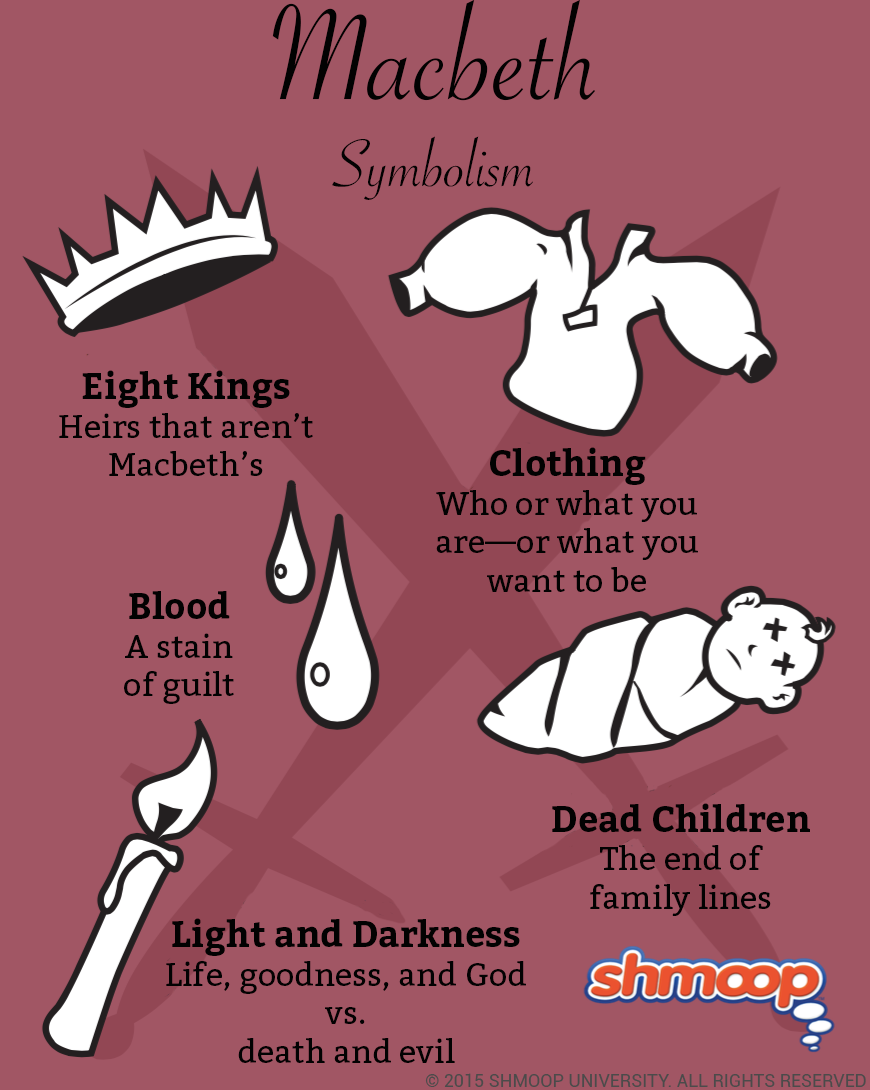
(Click the symbolism infographic to download.)
Get out the hydrogen peroxide, because this play needs it: there's blood all over. From the bleeding Captain in the beginning to Macbeth's bleeding head at the end, literal blood drips from every page. But in our view, it's the imagined blood that really counts.
When Macbeth considers murdering Duncan, he sees a floating "dagger of the mind" that points him in the direction of the sleeping king's room (2.1.50). As Macbeth wonders if his mind is playing tricks on him, the dagger becomes covered in imaginary blood, which anticipates the way that very real daggers will be soiled when Macbeth murders King Duncan.
But where does this dagger come from? Did the witches conjure it up? Is it a product of Macbeth's imagination? Is Macbeth being tempted to follow or warned not to pursue the hallucination? Given what happens later, we're tempted to say that it's Macbeth's own vision, an externalization of his guilt.
Out, Out, Damned Spot
Eventually, imagined blood comes to symbolize guilt for both Macbeth and Lady Macbeth. After he murders Duncan, Macbeth supposes that even "Great Neptune's ocean" could not wash away his stain of guilt (2.2.78) after Lady Macbeth' tells him to "go get some water / And wash this filthy witness" from his hands (2.2.60-61).
Obviously, water isn't going to get these two clean. Lady Macbeth spends most of the play's last acts seeing the imaginary "spot" of blood she can't seem to wash from her guilty hands (5.1.33). But it's Macbeth who really spells it out for us. Once he kills his friend Banquo, who returns as a ghost, Macbeth tells that "blood will have blood" (3.4.151). His image of wading in a river of blood sums up the lesson: you might just as well keep on going once you start, because that stuff is never going to wash out.