Symbolism, Imagery, Allegory
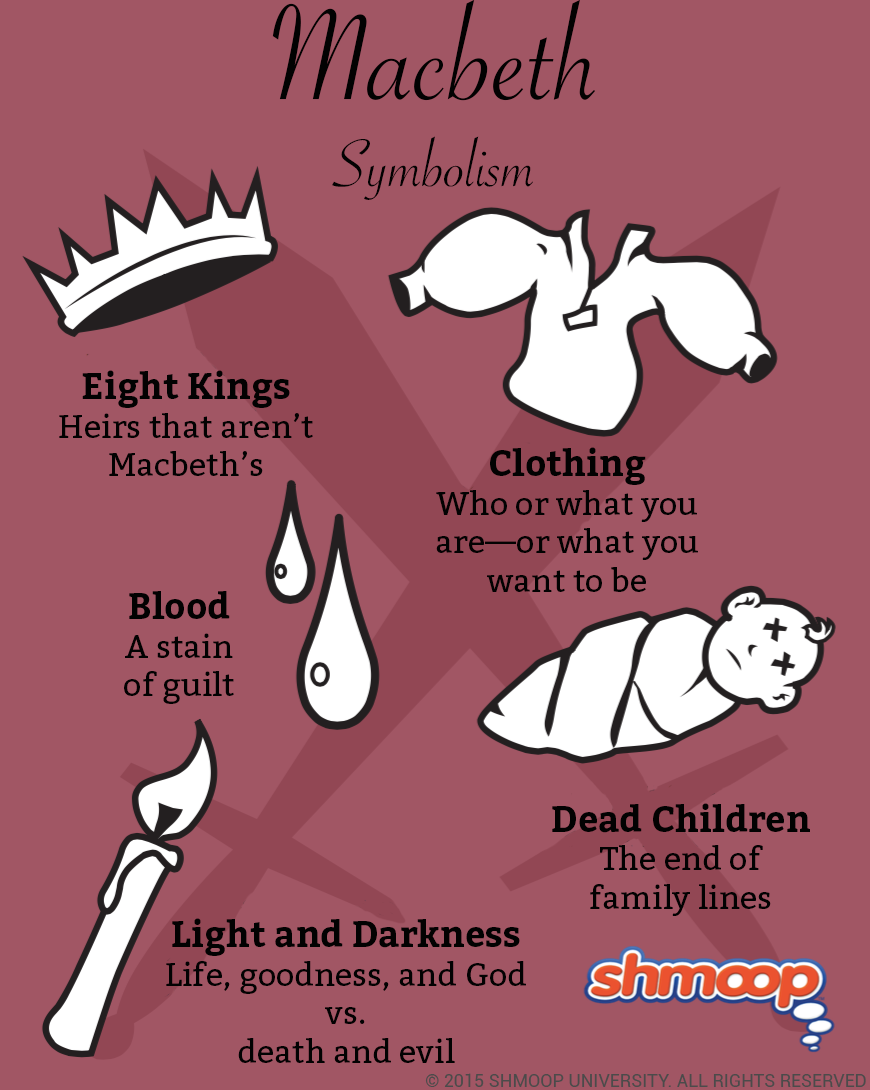
(Click the symbolism infographic to download.)
The drunken Porter responds to the knocking at the castle's gates just after Macbeth has murdered King Duncan. As he does so, he imagines there's a Catholic "equivocator" at the door "who committed treason enough for God's sake" (2.3.8;10).
On the one hand, an "equivocator" is a person who speaks ambiguously or doesn't tell the whole truth, which shows up over and over in Macbeth. The witches tell partial truths when they make predictions; Macbeth frequently bends the truth as he deliberates about whether or not it's OK to murder the king; he equivocates when he justifies (to his henchmen) that murdering Banquo is acceptable; and even Banquo has some ambiguous thoughts about the prophecy that he'll father kings.
On the other hand, the word "equivocator" is most likely an allusion to the treatise written by the Jesuit Henry Garnet, who encouraged Catholics to speak ambiguously or, "equivocate" when they were being questioned by Protestant inquisitors (so they wouldn't be persecuted for their religious beliefs).
What does that have to do with anything? Henry Garnet was tried and executed for his role in the Gunpowder Plot of 1605, when a group of Catholics planned to blow up the King and Parliament (they stored kegs of gunpowder in a nearby building). The plot failed, but it was a majorly upsetting experience for everyone involved—and it's likely that a lot of the audience members would have associated the scene of Macbeth returning from the room where he's murdered the sleeping king with this terrorist plot.
Ooh. We just got chills.