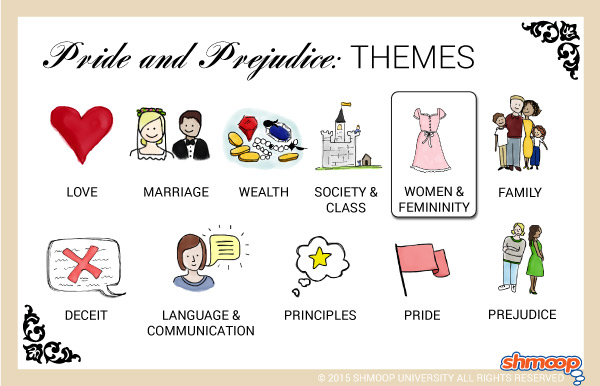
 (Click the themes infographic to download.)
Pride and Prejudice may start off with the anonymous figure of a rich, single man, but the novel is actually concerned with the plight of the poor, single woman. Most of the women we see here (the Bennet girls, Charlotte Lucas) are in a bind. They're too high class to get jobs (jobs aren't really an option for proper young ladies in early 19th-century England), but not high class enough to inherit wealth. That leaves them with options: wedding bells or penny-pinching old maidhood. It may not be as glamorous as the expensive shoes and fabulous apartments of today's chick lit, but it's a much more realistic look at what it meant to be a woman.
Questions About Women and Femininity
- How are the lives of the poor gentry (the Bennet girls, Charlotte) different than the lives of the rich gentry (Miss Bingley, Miss Darcy, etc.)? How do their options in life compare? How might their approaches to courtship and marriage compare?
- How are the male and female worlds separate in Pride and Prejudice? What do women have control over?
- Some people point out that Austen never has a scene in which two men talk to each other alone. That's not true for all of her novels, but it is true in this one. Does it matter? Did you even notice, until we pointed it out?
- What are the various ways that women relate to each other in this novel? Does the novel give us examples of female friendship, or does it mostly set women up as competitors? What is the difference between sisterhood and friendship?
Chew on This
The novel offers a much wider range of female characters than it does of male characters.
By writing about a female character who is bold, independent, honest, and forthright, Jane Austen is critiquing female identity in early nineteenth-century England.